Case File #012: Why Does My Sleeping Bag Smell Worse Every Year?
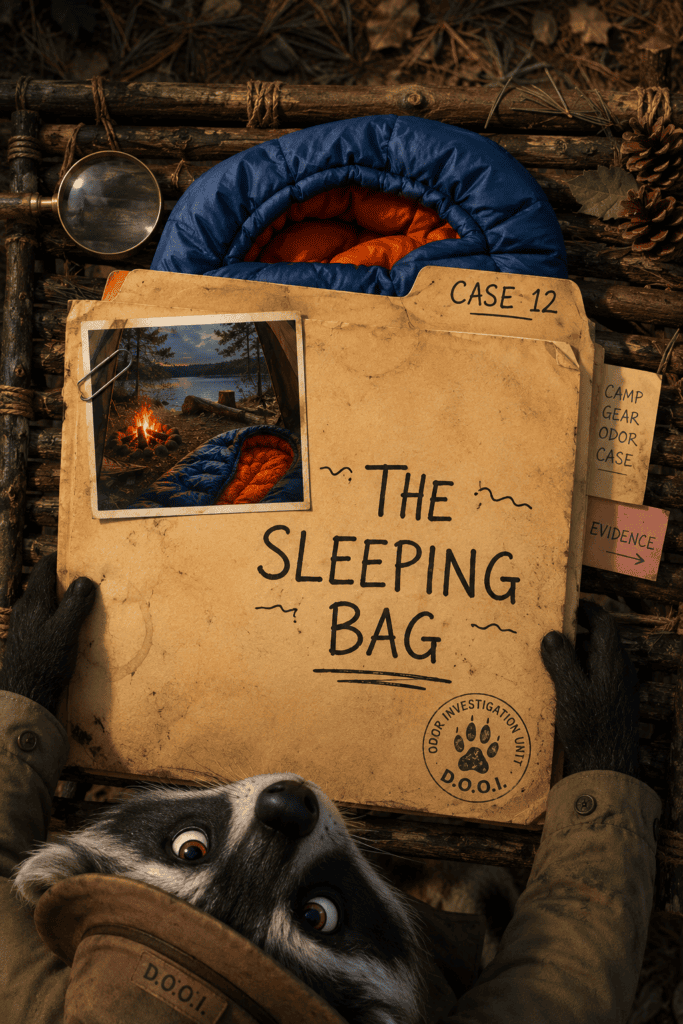
FreshTent Odor Investigation Files — Led by Chief Odor Investigator Rascal Raccoon
🦝 Official Case File
Case Number: 012
Case Name: The Sleeping Bag That Came Back Smelling Worse
Location: A suspicious storage tote in the back corner of the garage
Classification: Camping Gear Odor
Odor Level: 👃👃👃👃 out of five
Primary Suspects: Sweat, body oils, campfire smoke, trapped moisture, and poor storage decisions
Lead Investigator: Chief Odor Investigator Rascal Raccoon
Rascal’s Field Notes:
The sleeping bag looked innocent.
It was neatly rolled, tightly secured, and tucked inside a plastic storage tote beside the camping chairs.
Nothing appeared unusual.
Then someone opened the bag.
That was the moment the investigation officially began.
“The first smell was musty.
The second smell was smoky.
The third smell made me question every decision that had brought me into that garage.”—Rascal Raccoon, Chief Odor Investigator
The camper insisted the sleeping bag had been cleaned before storage.
Rascal remained unconvinced.
The sleeping bag was brought into the light, carefully unrolled, and examined for clues.
The outside appeared clean.
The inside told a different story.
Clue #1: Sleeping Bags Collect More Than Dirt

A sleeping bag is exposed to the human body for several hours at a time.
Even when a camper climbs inside wearing clean pajamas, the fabric can collect:
- Perspiration
- Body oils
- Dead skin cells
- Hair products
- Deodorant residue
- Sunscreen
- Bug spray
- Food crumbs
- Smoke particles
- Moisture from breath
Some of this material may be invisible, but invisible does not mean nonexistent.
Synthetic fibers, insulation, stitching, linings, and shell fabrics provide an enormous amount of surface area where moisture and organic residue can accumulate.
Once the sleeping bag is rolled or compressed, that material becomes trapped inside a warm, enclosed environment.
🐾 Rascal’s First Clue
Dry-looking fabric is not necessarily clean fabric.
Moisture can evaporate while body oils and odor-producing residue remain behind.
Clue #2: The Storage Bag May Be Part of the Problem

The stuff sack that makes a sleeping bag easy to carry is not always the best place to store it for several months.
When a sleeping bag remains tightly compressed:
- Air circulation is limited.
- Residual moisture escapes more slowly.
- Odor molecules remain concentrated.
- Insulation may stay packed together.
- Humidity changes can affect the enclosed airspace.
Camping fabrics are especially vulnerable because they are porous, frequently exposed to moisture, and commonly stored in confined spaces such as garages, sheds, attics, basements, gear bags, and plastic totes. FreshTent explains that these fabrics can absorb and later release odor compounds as temperature and humidity change.
That helps explain a familiar camping mystery:
The sleeping bag smelled acceptable when it was packed away, but noticeably worse when it was opened months later.
🦝 Evidence Tag A
The sleeping bag did not manufacture a brand-new odor during winter.
It trapped, concentrated, absorbed, and later released odor compounds already present in the fabric or surrounding storage air.
Also Read🦝Why Does Camping Gear Smell Musty Every Year?
Clue #3: Campfire Smoke Does Not Leave When the Fire Goes Out

A smoky sleeping bag may bring back pleasant memories of toasted marshmallows and late-night stories around the fire.
Unfortunately, that nostalgic campfire smell can eventually become stale, heavy, or sour.
Smoke contains extremely small airborne particles and volatile compounds that can settle onto fabric and travel between fibers.
Sleeping bags are especially good at holding onto them because they contain:
- Multiple fabric layers
- Quilted sections
- Seams and stitching
- Synthetic or down insulation
- Porous interior linings
The smell may become more noticeable when the sleeping bag is warmed by sunlight, body heat, or a hot vehicle.
Heat can increase the release of odor compounds trapped within the material.
Rascal Interviews the Evidence:
Rascal: “Were you exposed to campfire smoke?”
Sleeping Bag: No response.
Rascal: “Were you placed directly beside the fire for three consecutive nights?”
Sleeping Bag: Continued silence.
Rascal: “Did someone spill hot chocolate near the zipper?”
At this point, the cooler requested legal representation.
This will continue next week, Rascal thinks as he stares down the cooler...
Also Read🦝How to Get Campfire Smoke Smell Out of Sleeping Bags, Tents, and RV Fabrics
Clue #4: Moisture Gives Odor a Place to Grow

Camping gear does not need to be dripping wet to create an odor problem.
A small amount of trapped moisture may come from:
- Perspiration
- Morning condensation
- Damp clothing
- Wet grass
- Rain
- Humid air
- Packing gear before it has fully aired out
When moisture combines with organic residue, microorganisms may begin breaking down that material and producing volatile compounds.
These microbial volatile organic compounds, sometimes called mVOCs, contribute to the stale, sour, earthy, or musty smells associated with damp fabrics and enclosed storage.
🐾 Rascal’s Evidence B
The smell is not always the contaminant itself.
The odor may come from volatile compounds released as microorganisms interact with moisture and organic material.
That is why simply spraying fragrance onto the sleeping bag often fails.
The perfume may briefly overpower the smell, but it does not necessarily address the compounds producing it.
FreshTent’s odor-control approach focuses on treating both embedded surface odors and odor compounds within enclosed airspace rather than merely making the area smell different.
Also Read🦝How to Stop Wet Towels, Swimsuits, and Lake Gear From Smelling Like a Locker Room
The Sniff Test: What Kind of Odor Are You Dealing With?
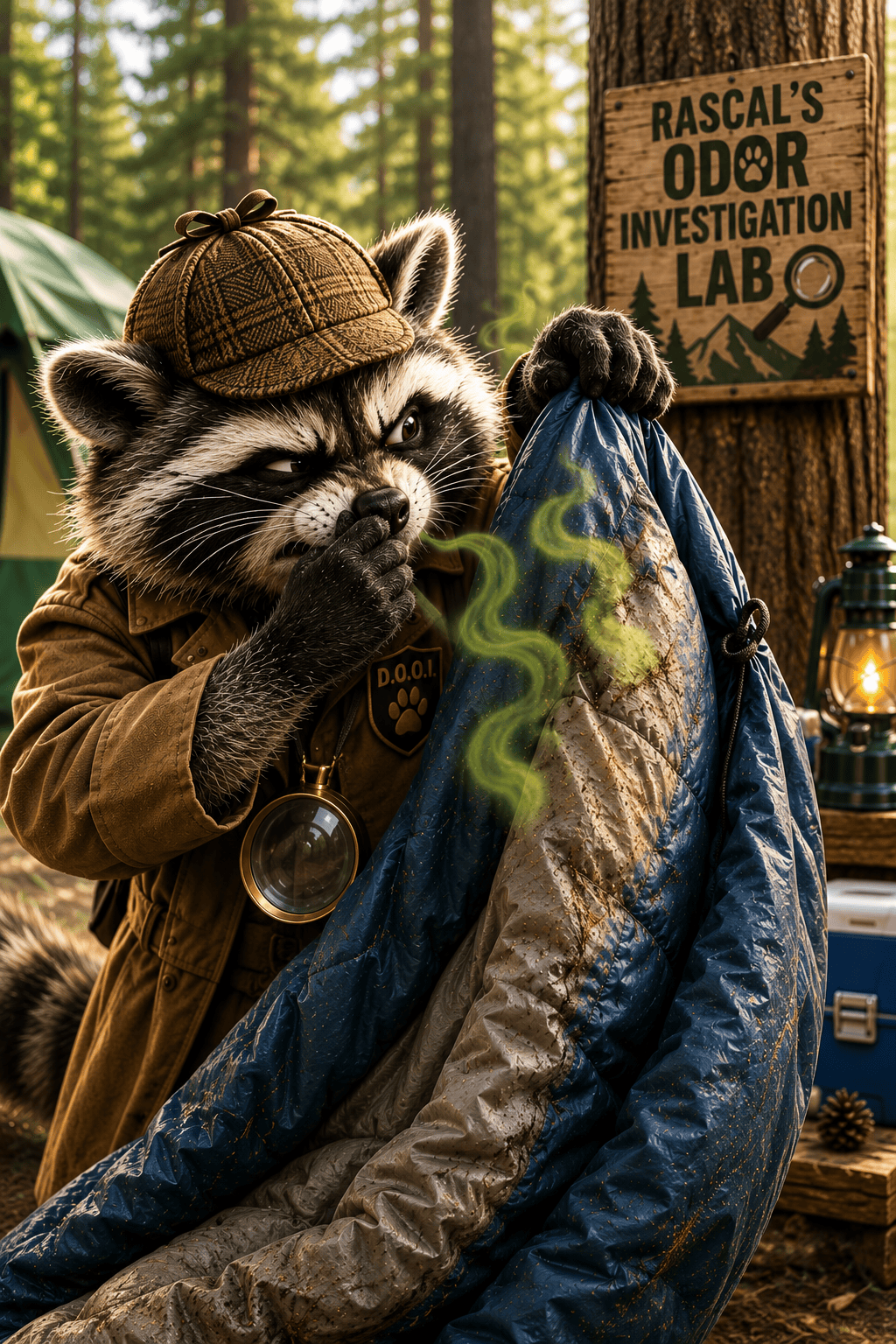
Rascal recommends identifying the general odor category before choosing a solution.
Musty or Earthy
Commonly associated with damp storage, enclosed air, humidity cycling, or microbial activity.
Sour or Sweaty
Often connected to perspiration, body oils, skin residue, damp clothing, or a sleeping bag packed before it was cleaned.
Smoky
Usually associated with campfires, cooking smoke, tobacco smoke, or storage beside other smoke-contaminated gear.
Food-Like or Rancid
May come from crumbs, spills, cooking grease, pet treats, or something forgotten inside a pocket.
Chemical or Plastic-Like
May be related to the materials used in the sleeping bag, the storage tote, fuel or solvent exposure, or nearby garage products.

Rascal’s Safety Note
A strong chemical, fuel, sewage, or unexplained mold-like odor deserves more than a casual sniff.
Remove the gear from the occupied area, ventilate the space, inspect the surrounding environment, and avoid using equipment that may have been exposed to hazardous substances until the source is understood.
Also Read🦝Why Humidity Makes Your RV Smell Worse in Summer | RV Odor Control Guide

Why Washing Alone May Not Solve the Mystery
Washing can remove dirt, sweat, oils, and some odor-producing residue from the fabric.
However, the smell may return when:
- The sleeping bag was not dried completely.
- The insulation remained damp internally.
- The storage sack already contained odor.
- The gear was placed inside a contaminated tote.
- Other smoky or musty equipment was stored nearby.
- The surrounding air remained humid or odor-laden.
- Odor compounds were reabsorbed during storage.
The cleaning process matters, but so does the environment the sleeping bag returns to afterward.
Placing a freshly cleaned sleeping bag back inside a musty gear tote is a little like washing your socks and storing them inside a hiking boot that Rascal has already placed under investigation.
🛍️All-Purpose | The Everyday Camping Detergent – 64oz
Surface Odors and Airborne Odors Are Different Suspects

One reason persistent gear odors can be so frustrating is that they don't hide in just one place.
When Rascal investigates a "smelly sleeping bag," he's really investigating an entire odor ecosystem.
Odor compounds can be found:
- Sleeping bag fabric and surface
- Deep between individual fibers
- Within the insulation
- Inside the stuff sack
- In the storage tote or gear cabinet
- Floating in the surrounding air
- On nearby tents, clothing, camp chairs, boots, backpacks, and other camping gear
That's why simply washing the sleeping bag—or simply deodorizing the storage area—may not completely solve the problem.
🦝 Rascal's Two-Step Recovery Plan
Step 1: Clean the Sleeping Bag Properly
Before returning your sleeping bag to storage, remove the organic material that feeds odor-causing microorganisms.
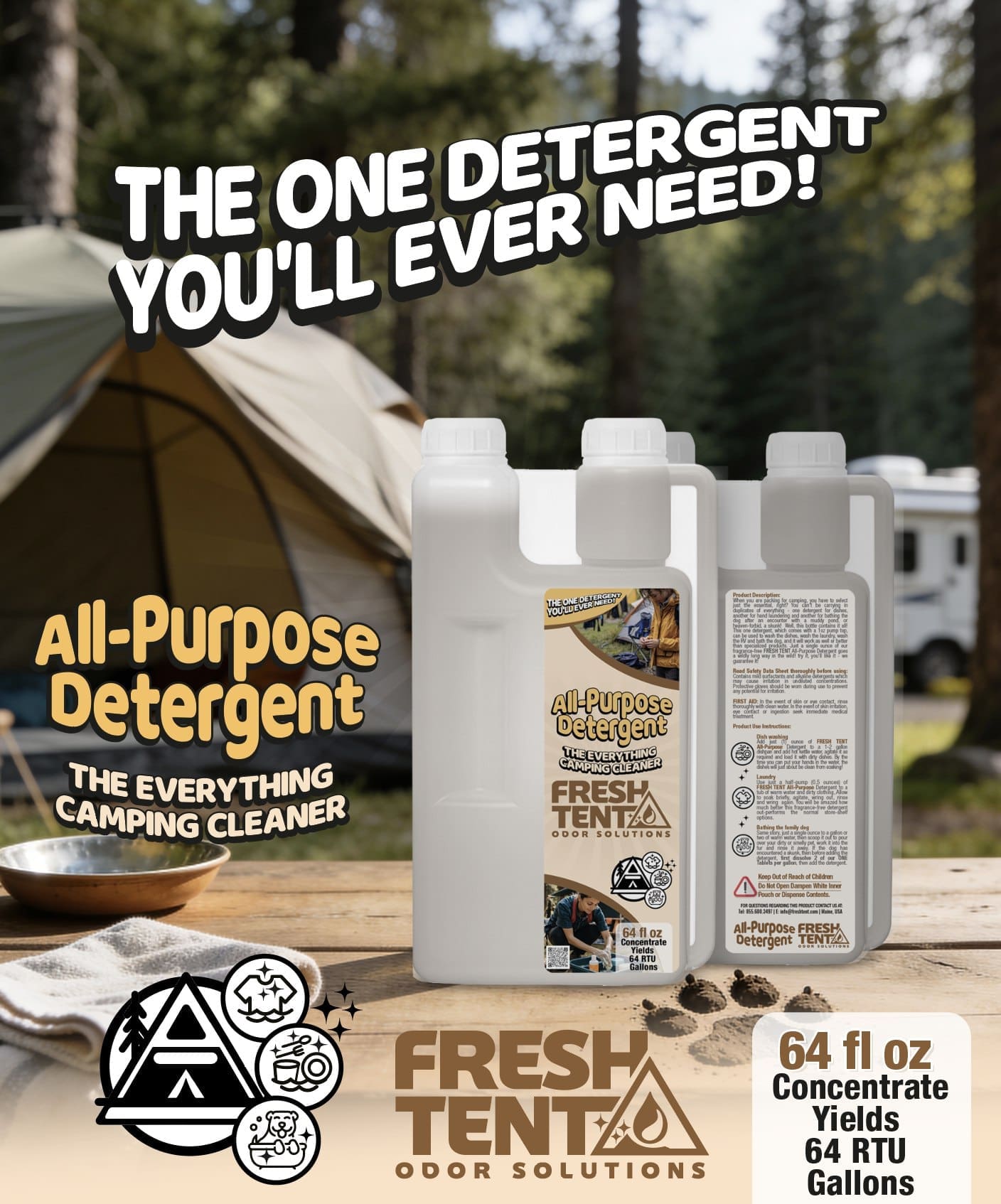
A great way to do this is to wash the sleeping bag according to the manufacturer's care instructions using FreshTent All-Purpose Camping Detergent, which is specially formulated for outdoor fabrics and camping gear.
For an extra level of odor control, dissolve one FreshTent ONE Spray & Wipe chlorine dioxide tablet in the recommended amount of water and add that activated solution to the wash cycle along with the detergent. The detergent helps lift away body oils, dirt, smoke residue, and organic contaminants, while the activated chlorine dioxide solution helps neutralize odor compounds that may remain within the fabric.
🦝 Rascal's Tip:
Always follow the sleeping bag manufacturer's washing instructions first. Some down-filled or specialty sleeping bags require specific wash settings or drying procedures.
After washing, dry the sleeping bag completely before storing it. Even small amounts of trapped moisture can allow odors to return.
🛍️ONE Spray | A Cleaning, Deodorizing & Sanitizing Starter Kit
Step 2: Treat the Storage Environment
Even a perfectly clean sleeping bag can absorb odors again if it's returned to a musty storage tote or enclosed compartment.
Odors don't just cling to fabric—they also linger in the air surrounding your gear.
That's why Rascal recommends treating the entire storage environment.
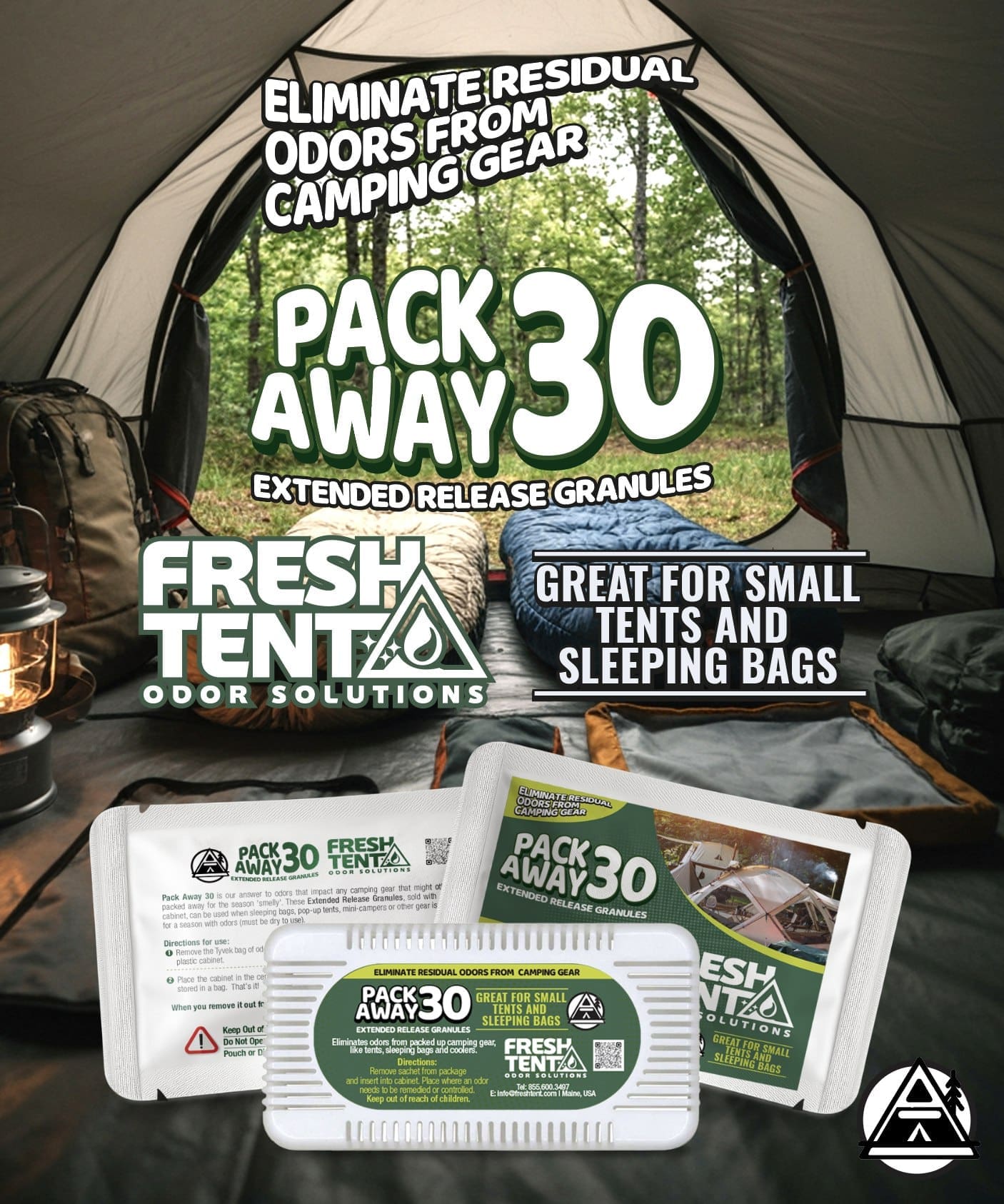
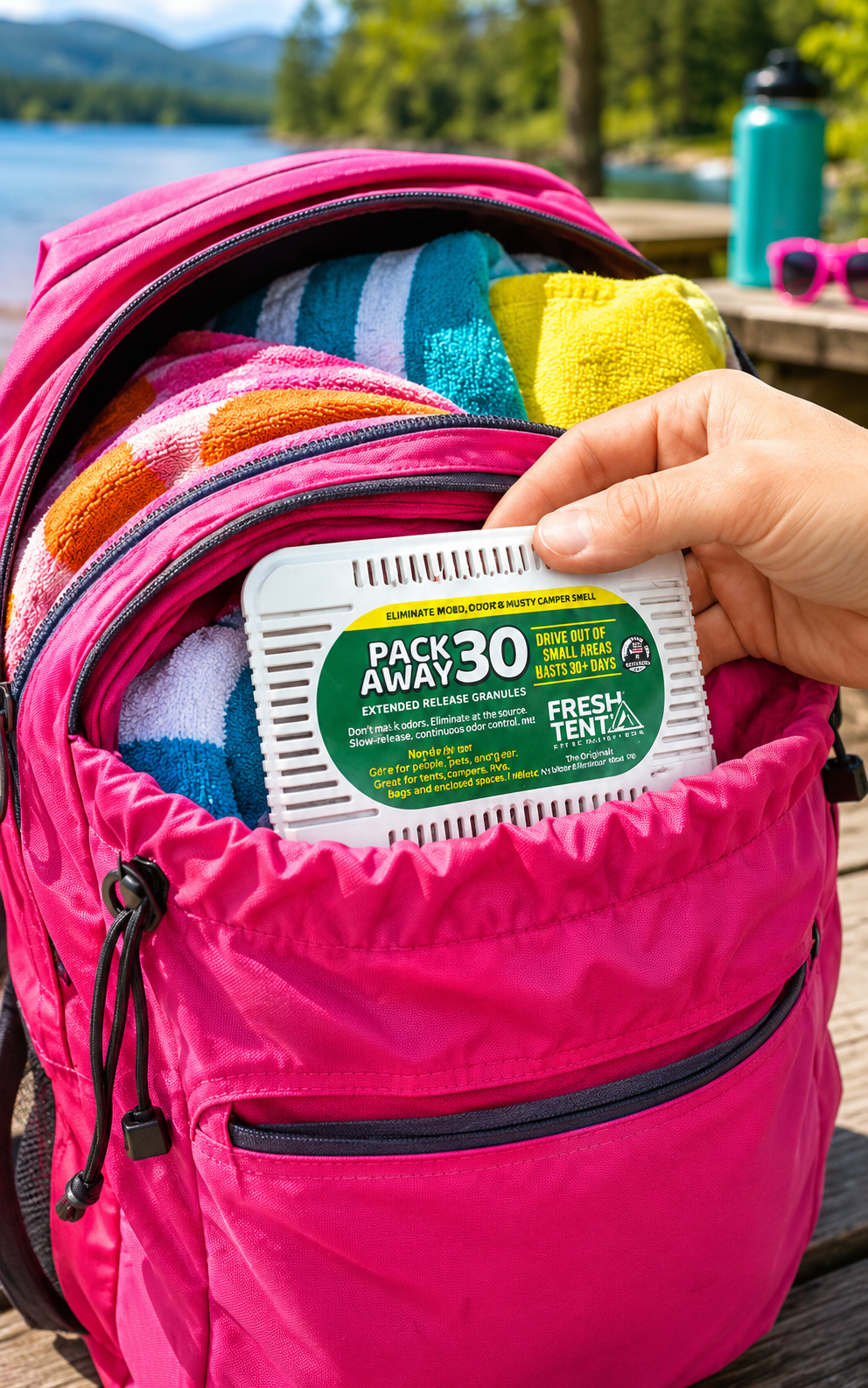
For sleeping bags, stuff sacks, coolers, duffel bags, and camping totes, FreshTent PACK-AWAY 30 continuously works within enclosed storage spaces to help control residual airborne odors while your gear is packed away.
While rolling up the sleeping bag, toss a FreshTent PACK-AWAY 30 right on the sleeping bag and roll it up with the bag.
If you're cleaning hard surfaces such as:
- Plastic storage totes
- Camping tables
- Gear bins
- Camper cabinets
- Tent flooring
- Camp kitchen equipment
use the FreshTent ONE Spray & Wipe Starter Kit to clean and deodorize those washable surfaces before storing your gear.
Maintenance is the key. Maintenance means more time to do the things you love in the great outdoors.

🕵️ Rascal's Final Observation
"Sleeping bags don't live by themselves."
"It spends months inside a stuff sack... inside a tote... inside a garage... beside muddy boots, smoky camp chairs, damp towels, and last summer's fishing gear."
"If you only clean the sleeping bag... you're only interviewing one suspect."
"The real culprit might be hiding in the evidence locker."
— Chief Odor Investigator Rascal Raccoon 🦝
Also Read🦝Why Camping Fabrics Hold Onto Odors (And How to Fix It)
🐾 Caught Red-Pawed

The Mistake
The sleeping bag was packed immediately after the final morning of the trip.
It had been used during a humid night.
It was rolled tightly.
It remained inside the car for six hours.
Then it was moved directly into a sealed tote.
The Excuse
“We were tired. We planned to unpack everything later.”
Rascal’s Finding
“Later” arrived approximately seven months afterward.
The Better Move
After returning home:
- Unroll the sleeping bag.
- Inspect it for moisture, smoke, dirt, and spills.
- Clean it when needed.
- Dry and air it completely.
- Store it loosely in a clean, controlled environment.
Also Read🦝The Definitive Guide to Camping Gear Odor Solutions: What Works, What Doesn’t, and Why
Rascal’s Final Verdict
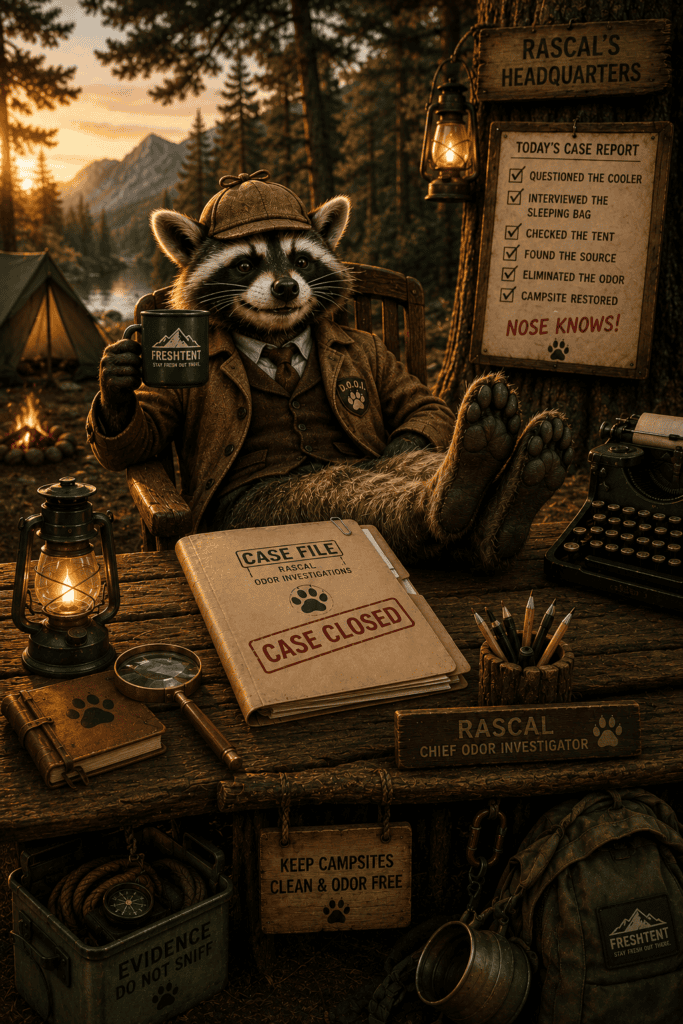
The sleeping bag was not haunted.
It had not “gone bad.”
It was holding onto a mixture of body residue, smoke compounds, moisture, and odor from an enclosed storage environment.
The odor became more noticeable when the sleeping bag was unpacked and exposed to warmer, more humid air.
Case Status: Solved
Primary Cause: Residual organic material and trapped odor compounds
Contributing Factors: Compression, moisture, smoke exposure, and enclosed storage
Recommended Action: Clean the sleeping bag properly with Rascal's recommended products, dry it completely, refresh the storage area, and maintain odor control throughout the storage period.
Also Read🦝Are FreshTent® Products Safe for Our Children and Pets?
Case Closed
“Another mystery solved.
Another camping trip rescued.
And another sleeping bag officially removed from my list of acceptable hiding places.”—Chief Odor Investigator Rascal Raccoon 🦝
🏡Thank You

FAQs
1. Why does my sleeping bag still smell even after I wash it?
A sleeping bag can continue to smell if odor-causing compounds remain trapped deep within the insulation, seams, or fibers. Smoke residue, body oils, food particles, moisture, mildew, and bacteria can all contribute to lingering odors. In some cases, the storage environment itself reintroduces odors after washing. Proper cleaning, complete drying, and maintaining a clean storage area all help prevent recurring smells.
2. How often should I wash my sleeping bag?

Most manufacturers recommend washing only when necessary rather than after every camping trip. However, if your sleeping bag has absorbed smoke, sweat heavily, become wet, or developed noticeable odors, it should be cleaned before long-term storage. Frequent campers may clean their sleeping bags once or twice each season depending on use.
3. Can I use regular household laundry detergent on camping gear?
Many outdoor manufacturers recommend detergents formulated for technical fabrics because conventional detergents may leave residues or contain brighteners, fragrances, or fabric softeners that can affect performance. FreshTent All-Purpose Camping Detergent is designed specifically for outdoor gear and may be used according to the manufacturer's care instructions.
4. How can I remove odors from camping fabrics without damaging them?
Always begin by following the manufacturer's cleaning instructions. Wash with an appropriate camping gear detergent, rinse thoroughly, and ensure the insulation dries completely. For additional odor control, FreshTent recommends adding one properly activated ONE Spray & Wipe chlorine dioxide tablet to the wash solution according to product directions and compatible manufacturer instructions. After cleaning, store gear in a clean, dry environment to help prevent odors from returning.
5. Why is complete drying so important before storing camping gear?
Even if the outer shell feels dry, moisture can remain trapped inside insulation. That hidden moisture creates ideal conditions for mildew, bacteria, and musty odors to develop during storage. Allow enough drying time, redistribute insulation if recommended by the manufacturer, and air out the sleeping bag before placing it into storage.
6. What is the best way to store a sleeping bag between camping trips?
Whenever possible, store your sleeping bag loosely in a breathable storage sack instead of leaving it compressed in its stuff sack for extended periods. Keep storage totes, cabinets, or closets clean and dry, away from damp concrete floors, chemicals, fuel containers, pet supplies, and other odor sources. Controlling odors within the storage space helps protect clean gear throughout the off-season.
7. Can odors spread from one piece of camping gear to another?
Yes. Smoke, mildew, food odors, and organic compounds can migrate throughout enclosed storage areas. Sleeping bags, tents, backpacks, camp chairs, clothing, boots, and coolers often share the same storage tote or garage, allowing odors to circulate between items. Cleaning all affected gear and maintaining fresh storage air helps reduce cross-contamination.
8. What's the difference between cleaning camping fabrics and controlling storage odors?
Cleaning removes dirt, oils, spills, sweat, and organic contamination from the fabric itself. Odor control addresses the air surrounding stored gear. Both steps are important because even perfectly cleaned equipment can absorb odors again if it is returned to a musty storage container, garage, camper, or gear cabinet. A complete maintenance routine includes both fabric cleaning and storage environment management. The storage management is the most important.
9. How can I help camping fabrics last longer?
Proper maintenance extends the life of technical outdoor fabrics and insulation. Avoid storing gear while damp, follow manufacturer washing instructions, avoid excessive heat during drying, repair small tears promptly, clean spills before they become permanent stains, and inspect zippers, seams, draw cords, and waterproof coatings after each trip. Routine care helps preserve loft, warmth, and performance for many seasons. Using STOW-AWAY 90 | Long-Term Granule Deodorizing Pouches for long term storage will maintain fresh fabrics all through winter seasons.
10. What is Rascal's best advice for keeping sleeping bags fresh all season?
According to Chief Odor Investigator Rascal:
"The sleeping bag isn't the only suspect."
After every camping trip:
- Wash gear when needed using manufacturer-approved methods.
- Allow everything to dry completely.
- Clean stuff sacks and storage containers.
- Wipe down coolers, tables, and gear bins.
- Keep storage areas clean and dry.
- Control odors in enclosed storage spaces before they become permanent residents.
A little maintenance after each adventure is far easier than trying to solve a major odor mystery months later.
Next Investigation

Case File #013: The Cooler Nobody Wanted to Open
A family returned from a fishing trip.
The cooler was unloaded.
The chairs were put away.
The camper was cleaned.
But one small bag of bait remained behind.
Rascal has requested protective equipment.