Nothing ruins the memories of a perfect lake day faster than opening your gear bag a few days later and getting hit with a wall of musty, sour odors.
Whether it's damp towels, wet swimsuits, life jackets, camp chairs, or water toys, summer gear has a habit of developing that unmistakable "locker room" smell. The good news? Those odors aren't permanent—and they're not something you have to live with all season.
By understanding why wet gear starts to stink and using the right cleaning and storage strategies, you can keep your camping equipment, beach essentials, and outdoor gear smelling fresh from Memorial Day through Labor Day.
Why Wet Summer Gear Develops Odors So Quickly

Most people assume the smell comes from the water itself.
In reality, the biggest culprit is moisture combined with bacteria, body oils, sweat, and organic debris.
When towels, swimsuits, and gear stay damp for extended periods, microorganisms begin breaking down organic material trapped in the fabric. As this process occurs, odor-causing compounds are released, creating the familiar musty, sour, or "gym bag" smell.
Common offenders include:
- Wet beach towels
- Swimsuits
- Life jackets
- Water shoes
- Fishing gear
- Camping blankets
- Kayak and paddleboard equipment
- Gym clothes packed after outdoor activities
The longer moisture remains trapped, the stronger these odors become.
The Hidden Problem: Packing Gear Too Soon
One of the most common mistakes outdoor enthusiasts make is packing equipment before it has completely dried.
After a long day on the lake or at the campground, it's tempting to toss everything into a tote, duffel bag, or camper storage compartment and deal with it later.
Unfortunately, that creates the perfect environment for odor development:
✅ Warm temperatures
✅ Limited airflow
✅ High humidity
✅ Organic residue
✅ Damp fabrics
This combination accelerates odor formation and can even lead to mildew growth.
Also check out this article https://clo2tablets.com/how-chlorine-dioxide-neutralizes-odor-compounds-created-by-wet-summer-gear/
Step 1: Wash Outdoor Fabrics Properly
Regular laundry detergents often focus on perfumes and brighteners rather than removing the substances causing odors.
For camping gear, outdoor fabrics, and technical materials, specialized cleaners are often more effective.

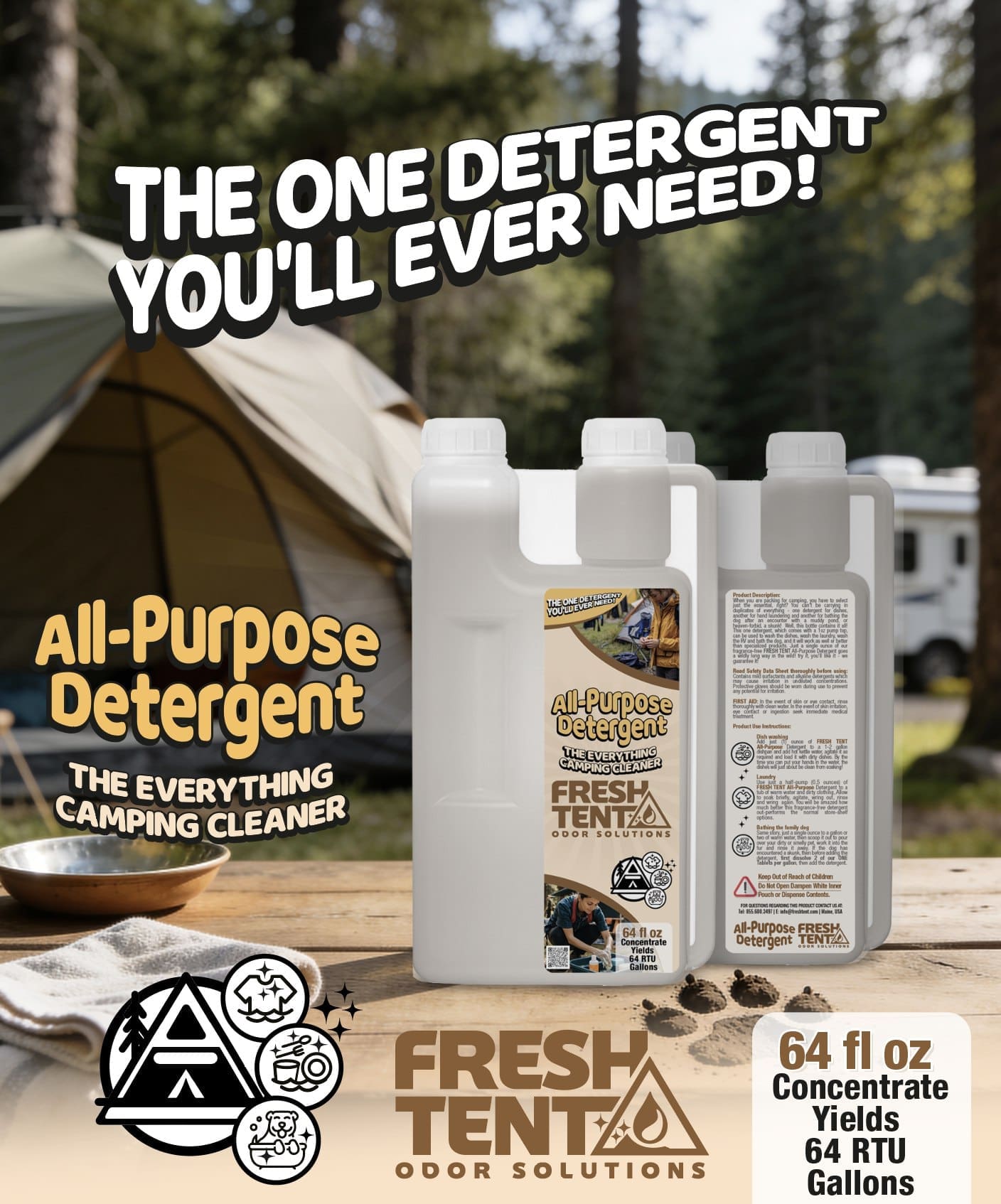
FreshTent Camping Detergent
FreshTent Camping Detergent is designed specifically for outdoor fabrics and gear that experience repeated exposure to moisture, dirt, sweat, and environmental contaminants.
Benefits include:
- Deep cleaning outdoor fabrics
- Removing trapped odor-causing residues
- Safe for technical materials
- Helps prevent lingering smells after storage
- Ideal for towels, swimsuits, camping clothes, and gear bags
Regular cleaning prevents odors from becoming embedded in fabric fibers over time.
Step 2: Make Sure Everything Is Completely Dry
Before storing any summer gear:
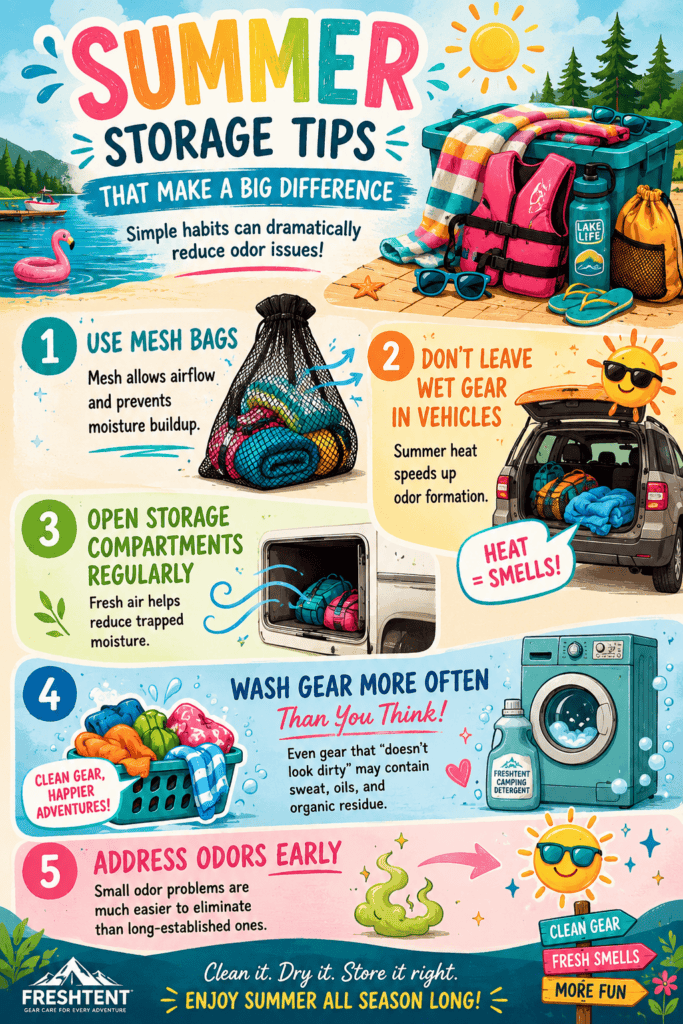
- Hang towels fully open
- Dry swimsuits completely
- Allow life jackets to air dry
- Empty coolers and dry interiors
- Open storage compartments
- Use fans when needed
Even small amounts of trapped moisture can trigger odor problems days later.
A good rule:
"If it feels slightly damp, it's still too wet to store."
Step 3: Protect Gear During Storage

Even after cleaning and drying, gear can develop odors while sitting in storage.
Humidity changes, temperature swings, and enclosed spaces can all contribute to stale smells.
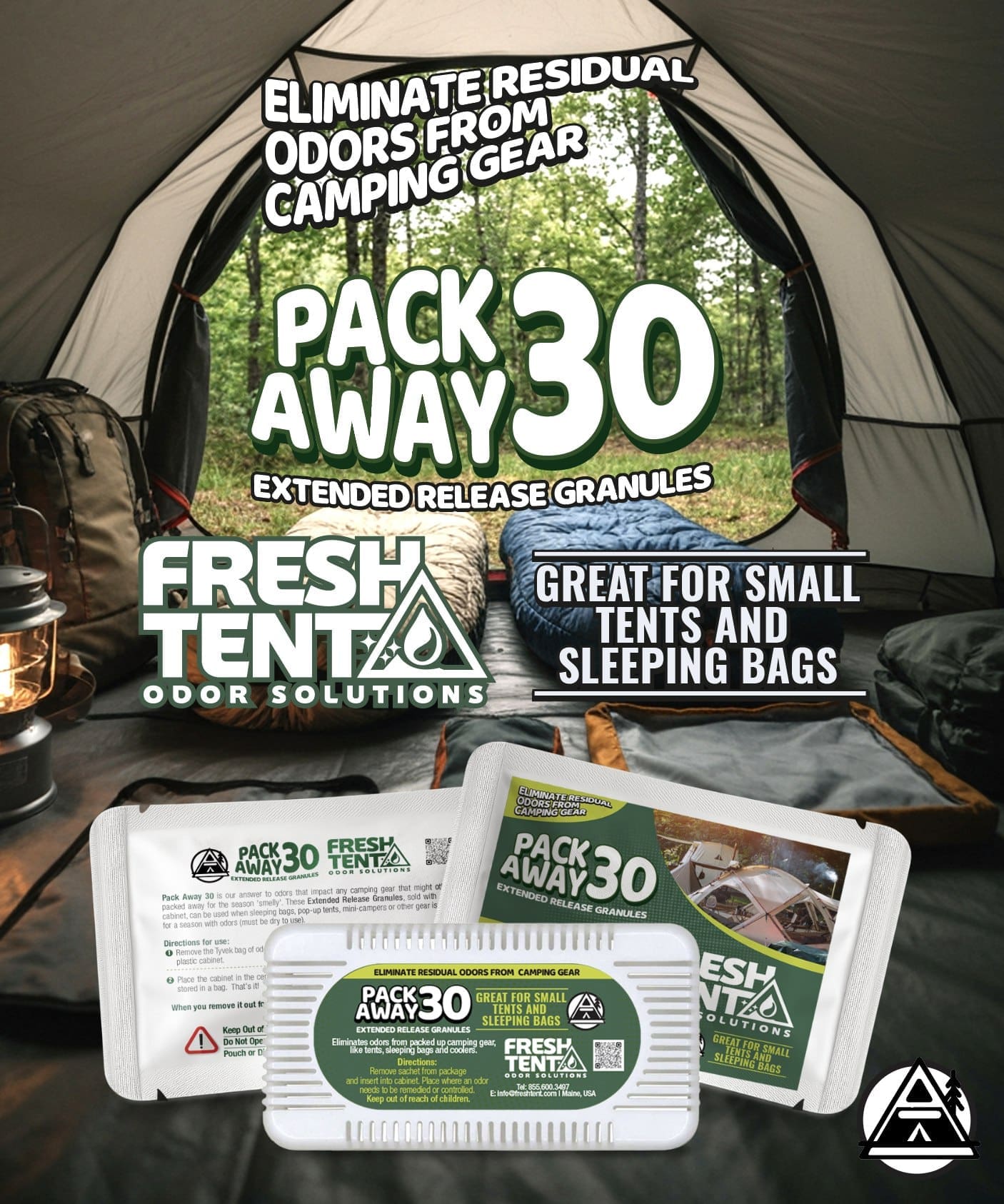
FreshTent Pack Away 30
Pack Away 30 is designed for smaller storage areas and gear containers.
Ideal uses:
- Duffel bags
- Gear totes
- Fishing tackle storage
- Beach bags
- Closet storage
- Sports equipment containers
It works continuously to help maintain freshness while equipment is stored between adventures.
FreshTent Stow Away 60
For larger storage spaces, Stow Away 60 provides odor-control protection in areas such as:
- Campers
- RV compartments
- Boat cabins
- Utility trailers
- Large gear rooms
- Seasonal storage spaces
This helps prevent odors from building up while equipment sits unused.
Also read ☀️Why Does Camping Gear Smell Musty Every Year?
Real-World Scenario
Imagine a family spends the weekend at the lake.
Sunday evening, they pack wet swimsuits, damp towels, and life jackets into a storage tote before heading home.
By Wednesday, the tote smells musty.
By the following weekend, the odor has spread throughout nearby gear.
Now imagine the same family:
- Washes fabrics with FreshTent Camping Detergent
- Allows everything to fully dry
- Stores gear with Pack Away 30
The difference is dramatic. Instead of fighting odors every weekend, they start each adventure with gear that smells clean and fresh.
Enjoy Summer Adventures Without the Smell
The best summer memories should come from time spent outdoors—not from unpleasant odors waiting in your gear bag.
By cleaning gear properly, allowing it to dry completely, and using storage solutions designed to maintain freshness, you can prevent the locker-room smell before it starts.
FreshTent Camping Detergent, Pack Away 30, and Stow Away 60 work together to help keep your towels, swimsuits, camping gear, and outdoor equipment fresh all season long.
Because the only thing your lake gear should remind you of is your next adventure.

Have More Questions?
1. Why do wet towels smell bad after just one day?
Wet towels trap moisture, body oils, sweat, and bacteria. As bacteria break down organic matter, they release odor-causing compounds that create the sour, musty smell commonly associated with damp towels.
2. How can I prevent swimsuits from developing odors?
Rinse swimsuits immediately after use, wash them regularly with a detergent designed for outdoor and camping gear, and allow them to dry completely before storing them.
3. Is it okay to leave wet gear in my vehicle overnight?
It's not recommended. Warm temperatures inside vehicles create the perfect environment for bacteria and odor formation, causing smells to develop much faster.
4. What types of camping gear are most likely to develop odors?
Wet towels, swimsuits, life jackets, camp shoes, sleeping bags, backpacks, fishing gear, and outdoor clothing are among the most common odor-prone items.
5. Why does gear still smell even after it dries?
If odor-causing bacteria, sweat, oils, or organic residue remain trapped in the fabric, odors can persist even after the gear appears dry. Proper cleaning is essential to eliminate the source of the smell.
6. How often should I wash camping gear during the summer?
Gear exposed to sweat, water, dirt, or extended outdoor use should be cleaned regularly. Towels and swimsuits should ideally be washed after every trip or several uses.
7. What is the best way to store camping gear between trips?
Make sure all gear is clean and completely dry before storage. Use breathable containers or mesh bags and consider odor-control products such as FreshTent Pack Away 30 or Stow Away 60 for added freshness protection.
8. Can humidity cause camping gear to smell even when it's stored indoors?
Yes. High humidity levels can reactivate moisture trapped in fabrics and encourage bacterial and mildew growth, especially in enclosed storage spaces.
9. How do FreshTent Pack Away 30 and Stow Away 60 help control odors?
These products help maintain freshness in enclosed storage areas by continuously working to reduce odor buildup, making them ideal for gear bags, totes, campers, RVs, and storage compartments.
10. What's the biggest mistake people make when storing lake and camping gear?
The most common mistake is storing gear before it has completely dried. Even slight dampness can lead to musty odors, mildew growth, and long-term smell problems that become harder to remove later.