You Wait All Winter for Camping Season… Then THIS Happens
The first warm weekend finally shows up after months of cold weather.
Suddenly everyone’s excited again.
The camper gets uncovered.
The gear totes come down from the garage shelves.
The folding chairs hit the driveway.
Someone starts talking about campfires, lake days, and where the first trip of the season should be.
It feels like camping season is officially back.
Then somebody opens the sleeping bag tote.
Instant regret 😅
That stale, damp, musty smell hits immediately.
The tent smells off too.
The cooler has that weird sour odor.
Even the backpacks somehow smell like they’ve been sitting in a wet basement all winter.
And the confusing part?
Everything was cleaned before it got packed away.
You remember airing things out.
You remember wiping gear down.
You remember thinking:
“Perfect. We’ll be ready to go next spring.”
But months inside sealed totes, enclosed campers, garages, sheds, and storage compartments quietly create the perfect environment for trapped moisture and odor buildup to develop slowly over time.
By the time camping season rolls around again, the smell has already settled deep into the fabric itself.
And once that happens, quick sprays and rewashing everything usually only help temporarily.
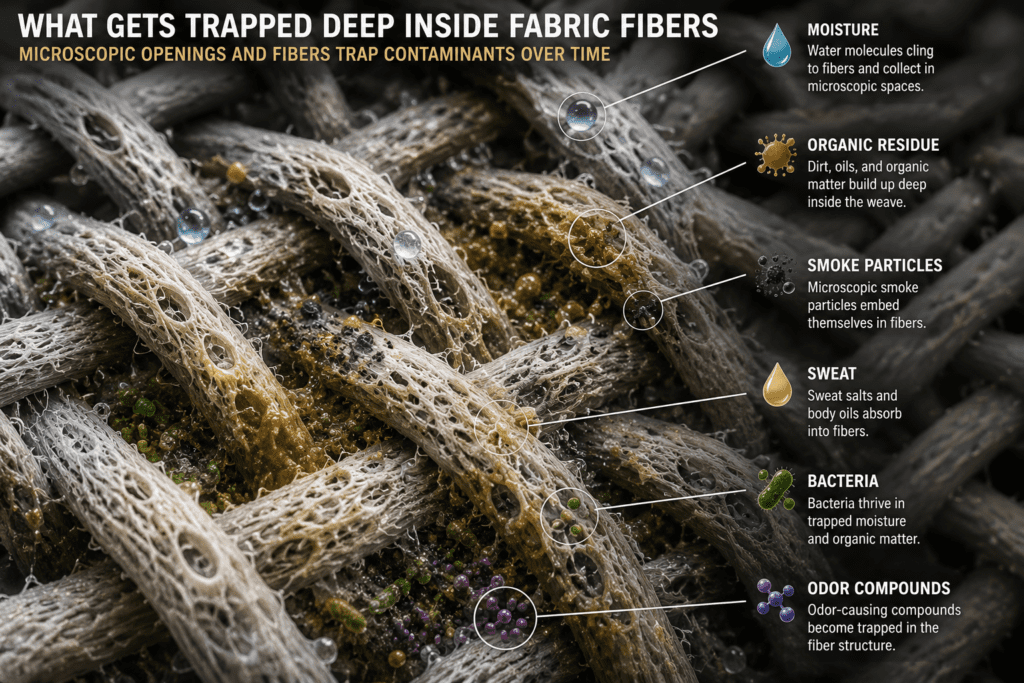
Why Camping Fabrics Hold Onto Odor
Camping fabrics absorb:
- Moisture
- Sweat
- Campfire smoke
- Humidity
- Organic residue
And because materials like:
- Tent fabric
- Sleeping bag insulation
- Backpack padding
- Foam gear
…are porous, odor gets trapped deep inside.
Why Washing Doesn’t Fully Solve the Problem
This is the frustrating part.
You CAN:
✔ Wash the gear
✔ Dry it outside
✔ Spray it down
…and the smell still comes back.
Because:
- Surface cleaning misses embedded odor
- Foam and insulation trap moisture
- Odor compounds remain deep inside materials
Also Read 📖The Definitive Guide to Camping Gear Odor Solutions: What Works, What Doesn’t, and Why
Common Misconceptions About Gear Odor
❌ “Sunlight fixes everything”
❌ “If it dried, it’s fine”
❌ “Laundry detergent removes all odor”
❌ “Fabric sprays solve the problem”
👉 Most of these only improve the smell temporarily.
Why This Problem Shows Up Every Spring
Once gear gets stored:
- Small moisture pockets remain
- Airflow disappears
- Odor develops slowly over time
By spring?
👉 The smell is already deeply embedded.
Also read 📖How to Clean a Moldy Cooler Before Your First Trip of the Season
Real-World Scenario
A couple opens their camper for the first trip of the season.
The cooler smells stale.
The sleeping bag smells damp.
The tent smells like mildew.
Suddenly the excitement of camping season turns into a giant cleaning project.
Sound familiar? 😅
What Actually Works Better

After years of fighting the same musty smells over and over again, many campers, RV owners, boaters, and outdoor enthusiasts eventually realize something important:
Most traditional odor solutions aren’t actually removing the problem.
Heavy fragrances may temporarily cover the smell.
Repeated rewashing may improve it for a little while.
Sprays can make gear seem fresher for a few days.
But when the odor keeps coming back season after season, it usually means the source was never fully eliminated in the first place.
That’s why more outdoor enthusiasts are shifting toward chlorine dioxide (ClO2) based odor-neutralizing treatments instead of relying on masking products alone.
Unlike fragrance sprays that simply cover odors in the air, chlorine dioxide works differently.
👉 It penetrates deep into fabrics, foam, insulation, storage compartments, and enclosed airspaces to help neutralize odor-causing compounds at the molecular level.
This is especially important for camping gear because materials like:
- sleeping bags
- tents
- RV cushions
- backpacks
- cooler seals
- boat upholstery
all contain porous surfaces that trap:
- moisture
- bacteria
- smoke particles
- mildew
- organic residue
- odor compounds
Once those contaminants settle deep inside the material, surface cleaning alone often isn’t enough to fully remove them.
That’s where chlorine dioxide becomes such an effective long-term solution.
Instead of simply making the gear smell “better,” ClO2 technology helps break down and neutralize the source of the odor itself — which is why many campers now use it not only for cleaning gear before storage, but also for maintaining freshness throughout the entire camping season.
A Better System for Eliminating Odors from Camping Gear
Most campers focus only on cleaning what they can see.
But long-term odor control usually requires treating:
- the gear itself
- the storage environment
- and the enclosed airspace where odors continue developing
That’s why many outdoor enthusiasts now use a layered approach instead of relying on fragrance sprays or rewashing gear over and over again.

Step 1 — Wash Fabrics and Gear Properly
Sleeping bags, camp blankets, outdoor clothing, tent fabrics, and soft gear can hold:
- sweat
- smoke particles
- bacteria
- trapped organic residue
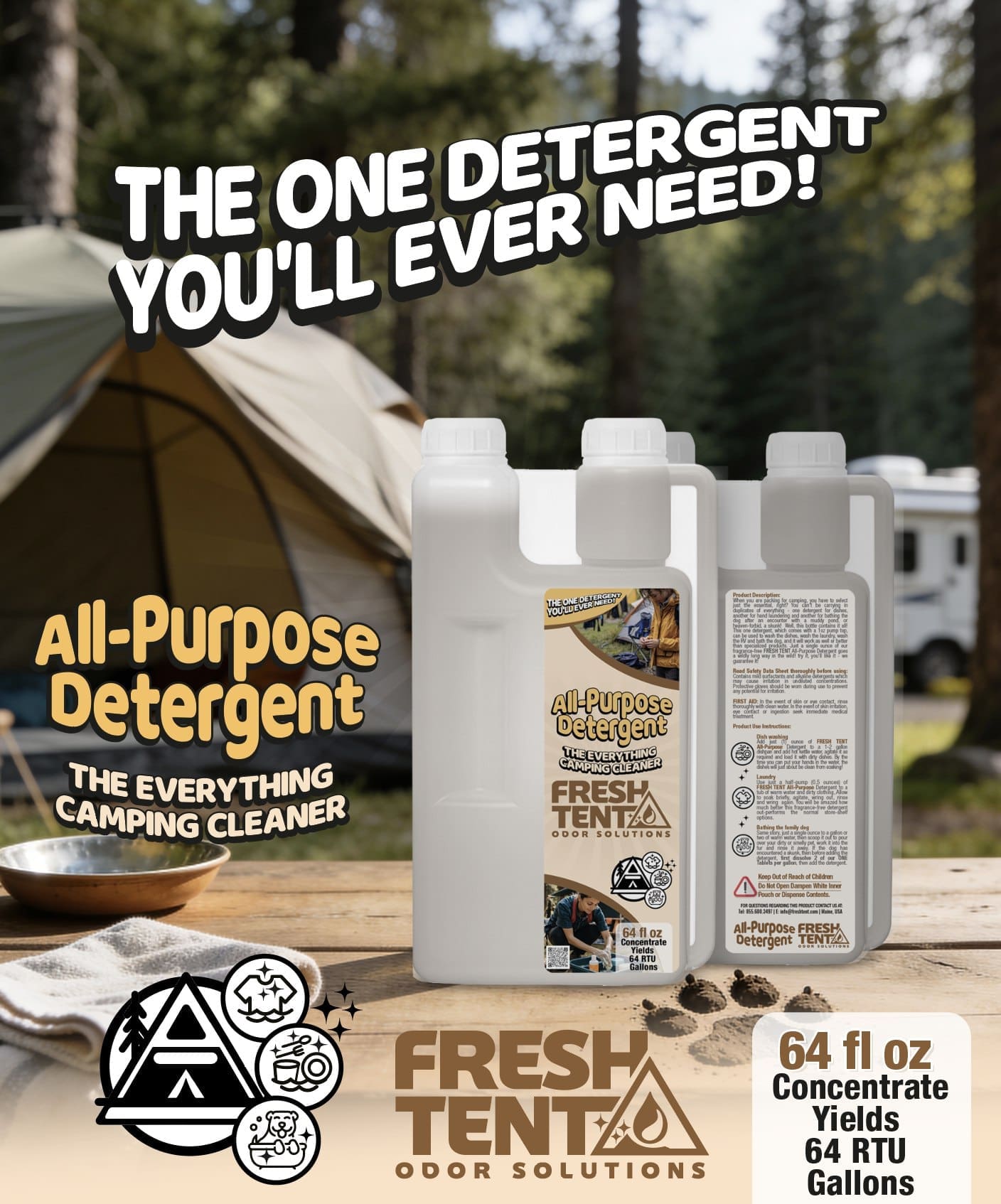
Using a deep-cleaning detergent specifically designed for camping and outdoor fabrics helps remove the buildup traditional detergents often leave behind.
👉 The FreshTent All Purpose Camping Detergent is commonly used to clean:
- sleeping bags
- outdoor fabrics
- camp blankets
- tents
- backpacks
- camping apparel
before long-term storage or before the season begins.
Step 2 — Treat Large Enclosed Areas
If odors have developed inside:
- RVs
- boats
- enclosed campers
- large storage areas
surface cleaning alone usually isn’t enough.
Many outdoor users use a full-space chlorine dioxide treatment to help neutralize odors throughout:
- fabrics
- upholstery
- enclosed airspaces
- storage compartments
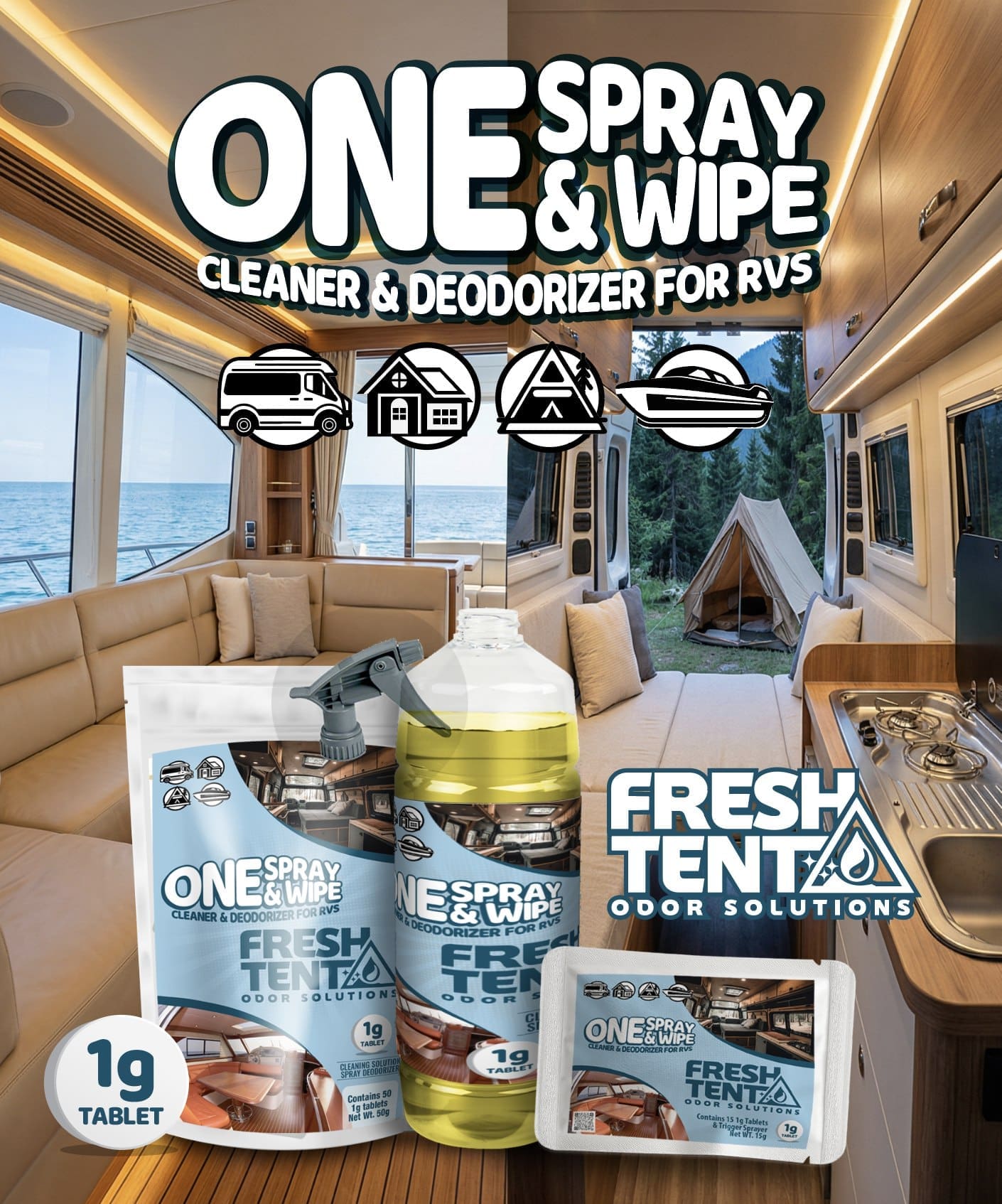
👉 The Large Space Deodorizing Kit for RVs & Boats is designed specifically for larger enclosed environments where musty odors, mildew smells, and stale air continue returning season after season.

Step 3 — Protect Storage Totes During the Off-Season
One of the biggest mistakes people make is sealing gear into totes without protecting the enclosed environment itself.
Even small amounts of trapped moisture can slowly create odors during storage.
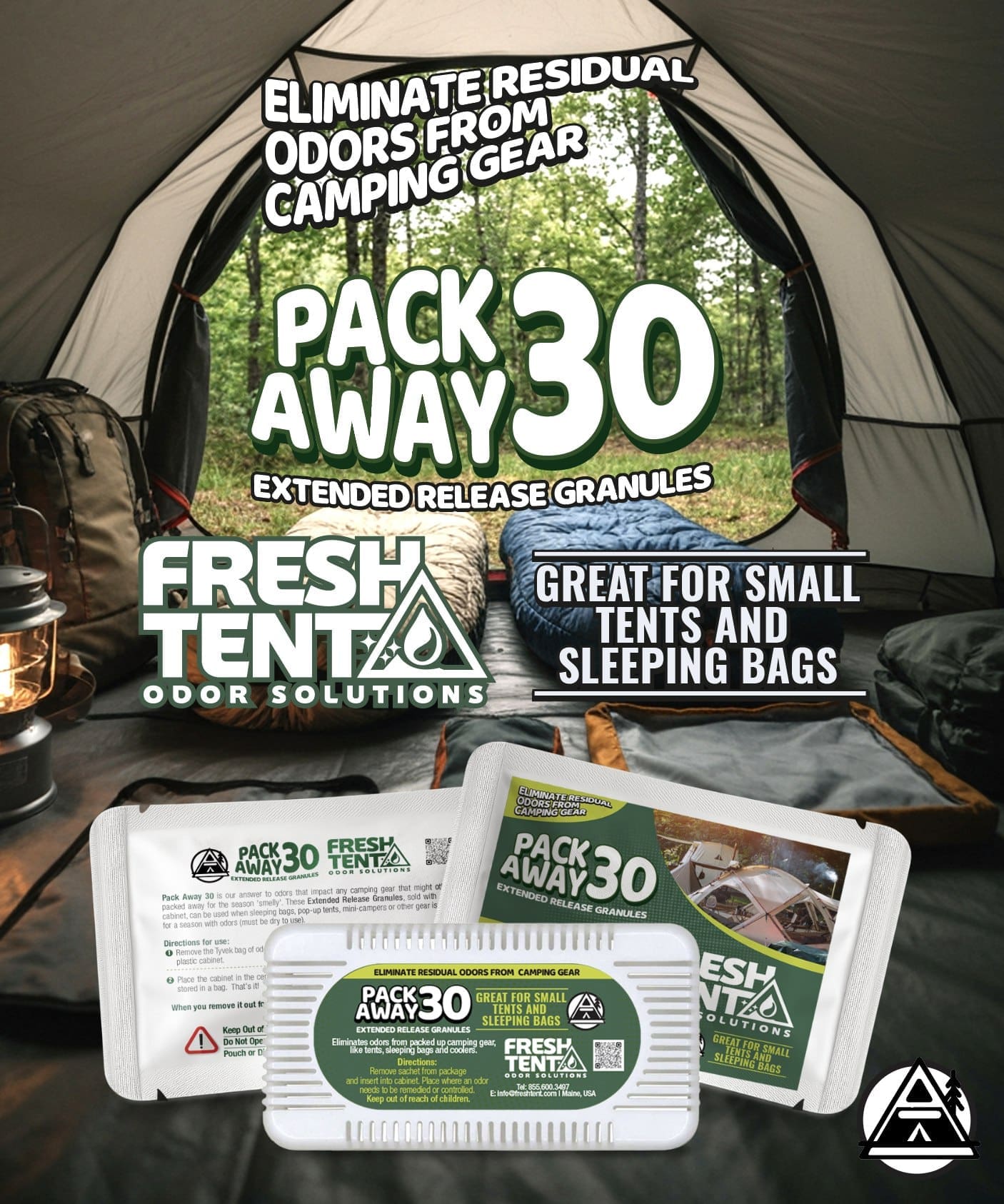
👉 The Pack Away 30 Small Compartment Deodorizing Kit is designed to be placed directly inside:
- camping totes
- storage bins
- small gear compartments
- enclosed camping storage areas
to help neutralize odors during the entire storage season.
Step 4 — Maintain Freshness in Larger Compartments
For:
- RV compartments
- boat storage areas
- larger enclosed gear storage spaces
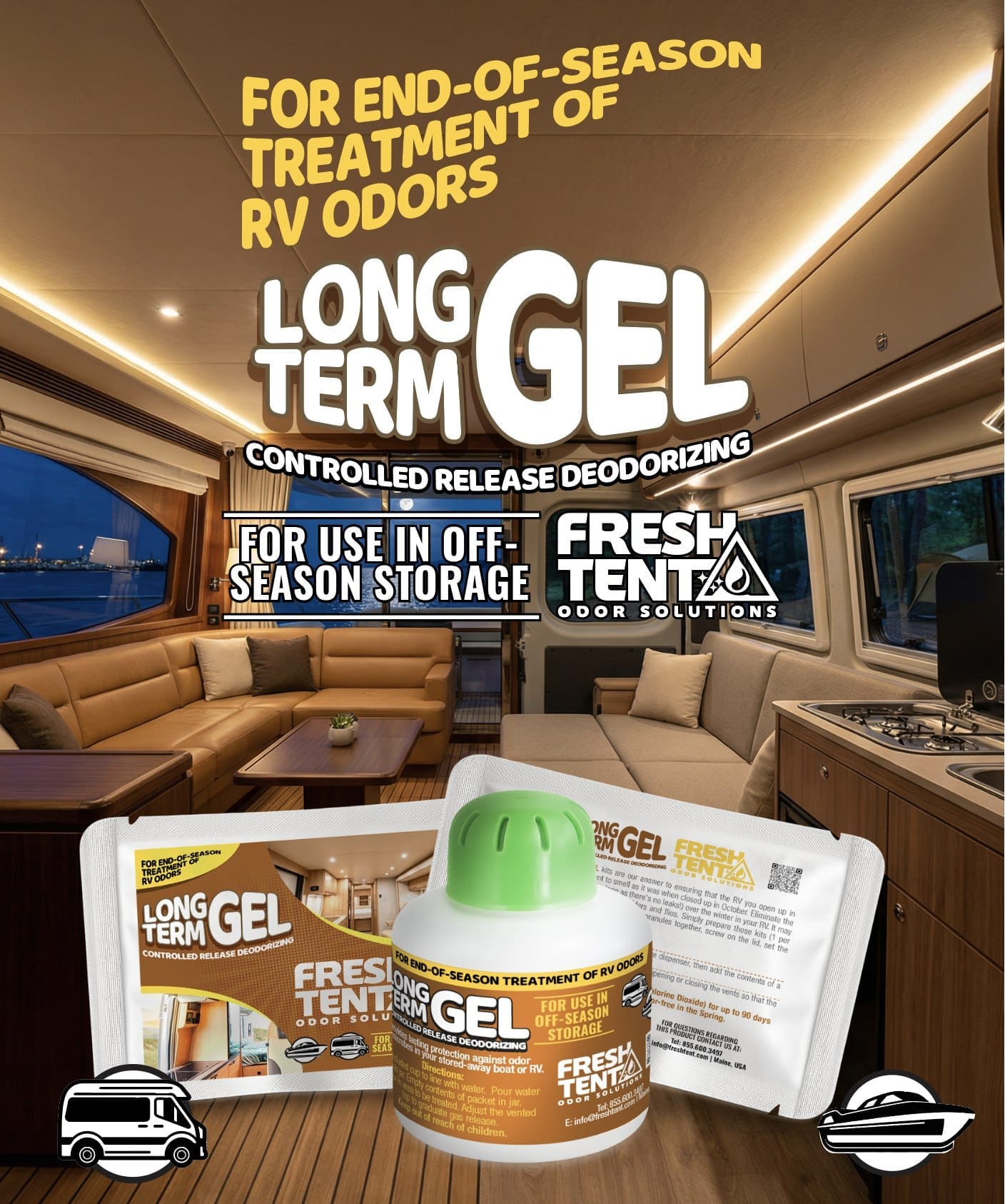
many campers use long-term deodorizing treatments throughout the season to help reduce odor buildup before it starts.
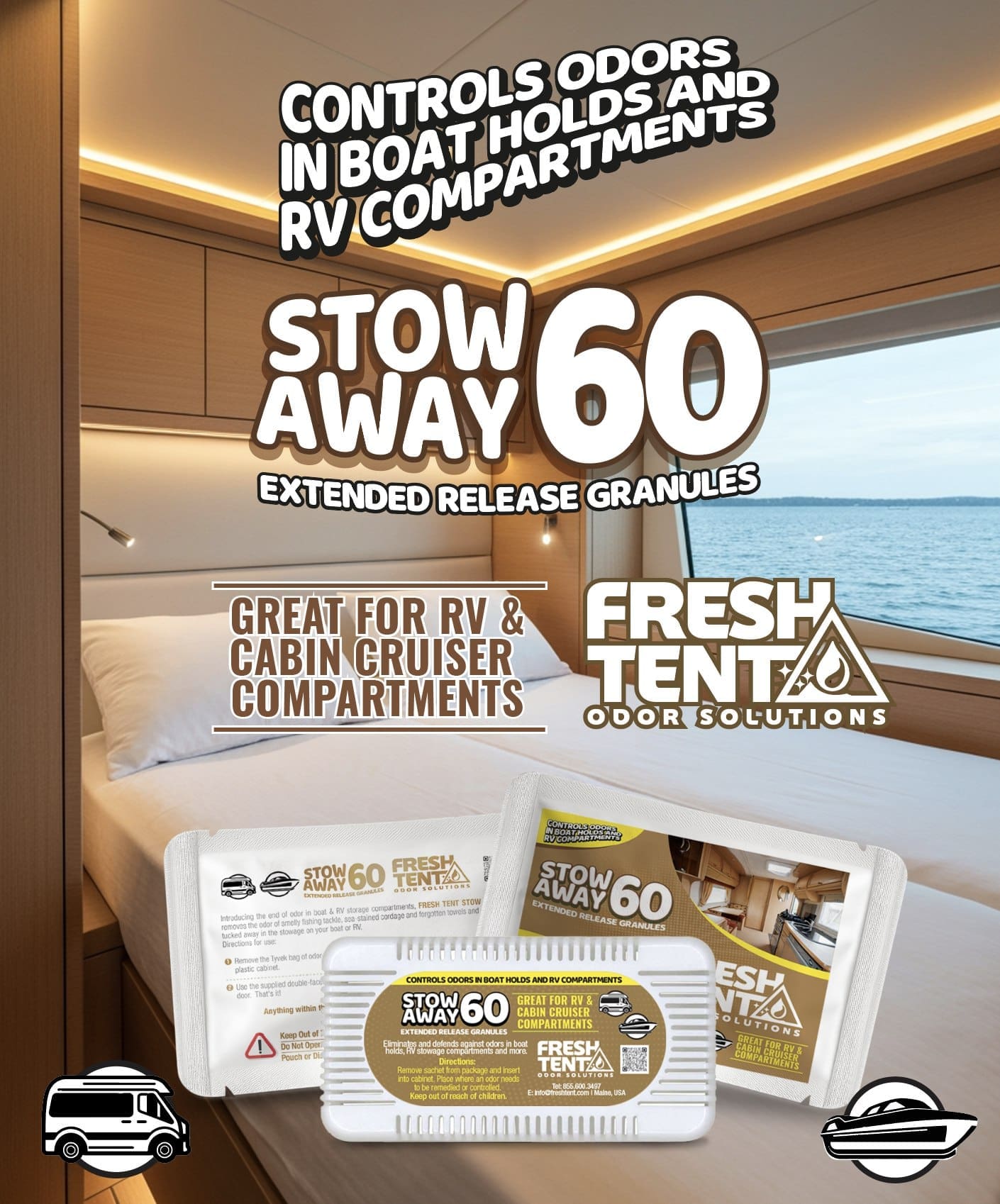
👉 The Stow Away 60 Deodorizing Kit is designed for larger compartments and enclosed storage spaces where airflow is limited and odors tend to return repeatedly.
Step 5 — Maintain Freshness During Active Camping Season
Even after cleaning and storage prep, camping gear still gets exposed to:
- humidity
- damp conditions
- smoke
- food odors
- moisture
That’s why many RV owners and outdoor enthusiasts continue using maintenance-level odor control throughout the camping season instead of waiting for odors to build up again.
👉 Using ongoing odor-neutralizing treatments throughout the season helps reduce the cycle of musty smells returning year after year.
What’s Changing in Outdoor Gear Care
Campers and RV owners are becoming much more aware of:
- Long-term gear maintenance
- Moisture control
- Odor prevention
- Deep-cleaning solutions
There’s a growing shift toward:
👉 preserving gear instead of constantly replacing it

Want to Understand Why Fabrics Trap Odor?
For the science behind why porous materials trap odor so deeply:
👉 Why porous materials hold odor longer than you think (CLO2 Tablets)
Read the article here https://clo2tablets.com/odor-in-porous-materials/
Conclusion (CTA)
For a lot of outdoor enthusiasts, the beginning of camping season starts the exact same way every year:
You pull the gear out excited for the first trip…
and end up spending the weekend fighting musty smells instead.
The frustrating part is that most people aren’t doing anything “wrong.”
Camping gear naturally goes through:
- humidity
- temperature swings
- smoke exposure
- damp conditions
- long periods of enclosed storage
Over time, odors slowly settle deep into fabrics, foam, insulation, and gear compartments where normal cleaning methods often can’t fully reach.
That’s why the smell keeps returning season after season.
But once you understand what’s actually happening inside those materials, the solution starts making a lot more sense.
Instead of simply covering up odors with heavy fragrances or rewashing gear over and over again, more campers and RV owners are focusing on:
👉 eliminating odor at the source
👉 controlling moisture before storage
👉 and maintaining freshness throughout the season
Because camping gear should smell like fresh air, campfires, and adventure…
—not like the inside of a forgotten storage tote.
And honestly?
The first trip of the season is a lot more enjoyable when you spend it outside around the fire instead of trying to figure out why the tent smells weird 😄
Also Read 📖Why Does Camping Gear Smell Musty Every Year?
❓ FAQs (10)
1. Why do sleeping bags smell musty?
Because moisture and odor compounds become trapped inside insulation.
2. Can tents trap odor?
Yes, tent fabrics commonly absorb moisture and odors.
3. Why does odor come back after washing?
Because odor compounds can remain deep inside porous materials.
4. Does sunlight remove odor completely?
No, it may help temporarily but often doesn’t eliminate the source.
5. Why do camping totes smell?
Trapped moisture and limited airflow create odor buildup.
6. Can foam camping pads hold odor?
Yes, foam materials easily absorb moisture and bacteria.
7. What causes mildew smell in camping gear?
Moisture, humidity, and trapped organic residue.
8. Do fragrance sprays fix gear odor?
No, they usually mask the smell temporarily.
9. How do you prevent camping fabric odors?
Dry gear fully and neutralize odor before storage.
10. Why do odors get worse in spring?
Humidity and warmer temperatures reactivate trapped odor compounds.