The Mystery of the Summer RV Smell

You cleaned the RV before storage.
The trash is gone.
The refrigerator is empty.
Everything looked spotless when you locked the door.
Then summer arrives.
The temperatures climb.
Humidity rises.
You open the RV door and suddenly you're greeted by a stale, musty smell.
Sound familiar?
You're not alone.
One of the most common complaints among RV owners is the appearance of unexplained odors during warm weather months.
The culprit is often humidity.
👉🏻5 Camping Foods That Leave the Worst Smells in Your RV
Why Summer Humidity Creates Odor Problems
Humidity doesn't create odors from nothing.
Instead, it creates ideal conditions for the microorganisms that produce odors.
Inside an RV, moisture can accumulate from:
- Outdoor humidity
- Air conditioning condensation
- Cooking activities
- Showers
- Wet clothing
- Damp towels
- Stored gear
- Seasonal storage conditions
Once moisture enters the RV, it often becomes trapped inside enclosed areas where airflow is limited.
These areas become ideal environments for microbial growth.
Also Read 🩱How to Stop Wet Towels, Swimsuits, and Lake Gear From Smelling Like a Locker Room
The Science Behind RV Odors

Most persistent RV odors originate from microorganisms.
Common culprits include:
Mold
Mold thrives in damp environments and often creates the classic musty smell many RV owners recognize immediately.
Mildew
Mildew commonly develops on fabrics, walls, seals, and hidden surfaces exposed to moisture.
Bacteria
Bacteria feed on organic materials and can produce foul-smelling compounds as they grow.
Biofilms
Biofilms are colonies of microorganisms protected by a self-produced layer that allows them to survive cleaning efforts and continue producing odors.
These microorganisms release compounds called microbial volatile organic compounds (mVOCs).
Many of these compounds are responsible for the stale, earthy, musty odors often associated with RV storage and summer humidity.
Also Read 🩱Why Camping Fabrics Hold Onto Odors (And How to Fix It)
Common Hidden Odor Sources Inside RVs
Many odor sources remain hidden from view.
Common trouble spots include:
- Under mattresses
- Storage compartments
- Air conditioning systems
- Bathroom areas
- Cabinet interiors
- Upholstery
- Curtains
- Carpeting
- Utility compartments
- Under sinks
This is why odors often return even after cleaning visible surfaces.
Also Read 🩱How to Clean a Moldy Cooler Before Your First Trip of the Season
Why Air Fresheners Often Fail
Many RV owners respond to odors with:
- Scented sprays
- Hanging air fresheners
- Candles
- Fragrance products
While these products may temporarily improve the smell of the RV, they typically do not address the underlying source.
The microorganisms continue growing.
The odors continue forming.
The cycle repeats.
👉🏻Deodorizing RVs & Cabin Cruisers
The FreshTent Odor Control System
FreshTent products are designed to help RV owners address odor issues at the source.
Large Space Kit
 Best For
 Best For
- Entire RV treatment
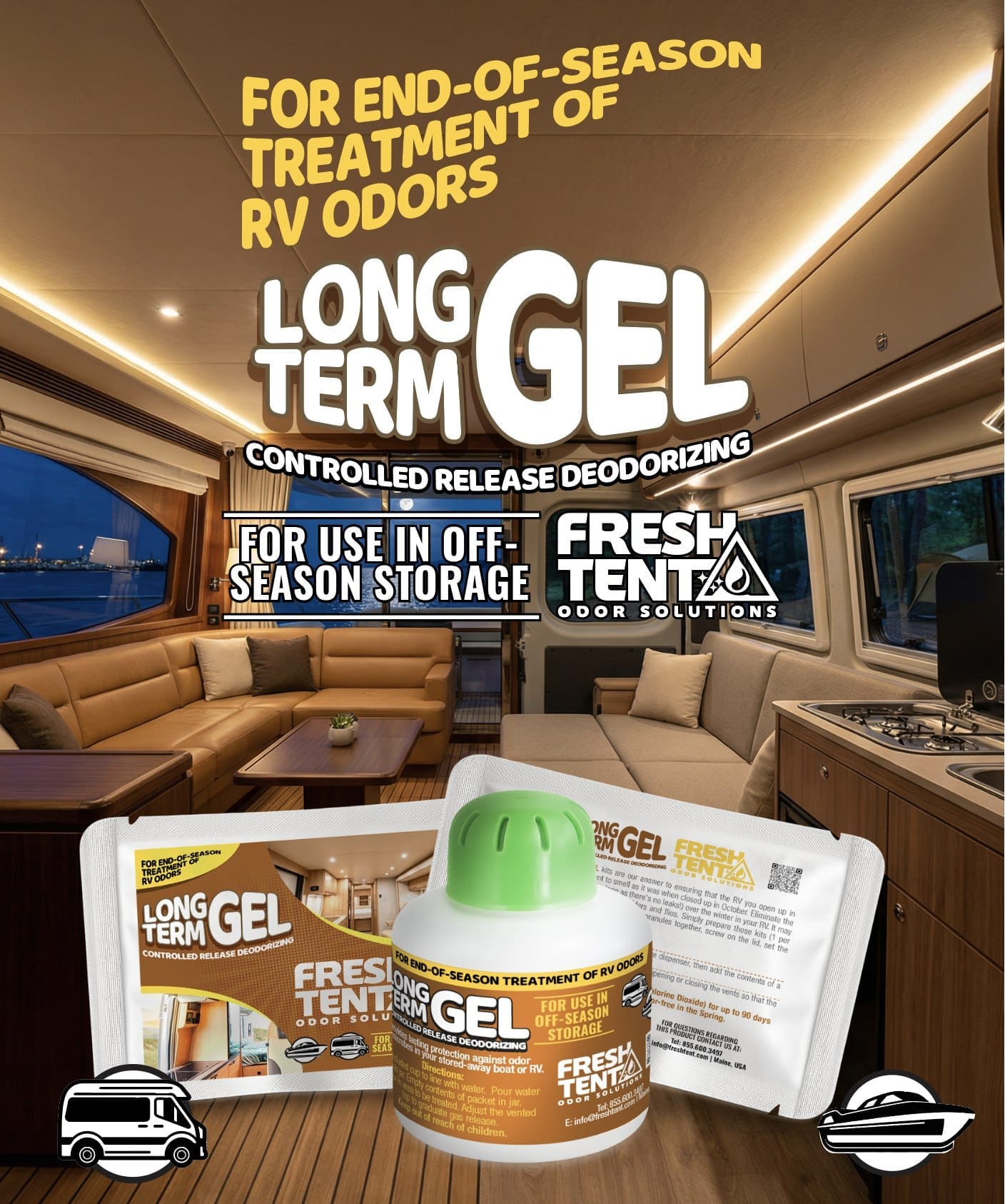
- Seasonal storage preparation
- End-of-season odor removal
- Persistent musty smells
The Large Space Kit allows chlorine dioxide gas to circulate throughout the RV interior, helping reach areas that traditional cleaning methods may miss.
This makes it ideal for whole-RV odor treatment.
🦠Large Space Deodorizing Kit for Boats, Cabins & RV’s
Stow Away 60
Best For
- Storage compartments
- Closets
- Utility bays
- Long-term storage
These areas often remain closed for weeks or months while moisture accumulates.
The Stow Away 60 helps provide ongoing odor prevention in enclosed storage spaces.
🦠STOW-AWAY 60 | Deodorizing Kit for RV & Boat Compartments
Surface Spray
Best For
- Bathrooms
- Kitchens
- Hard surfaces
- Frequently touched areas
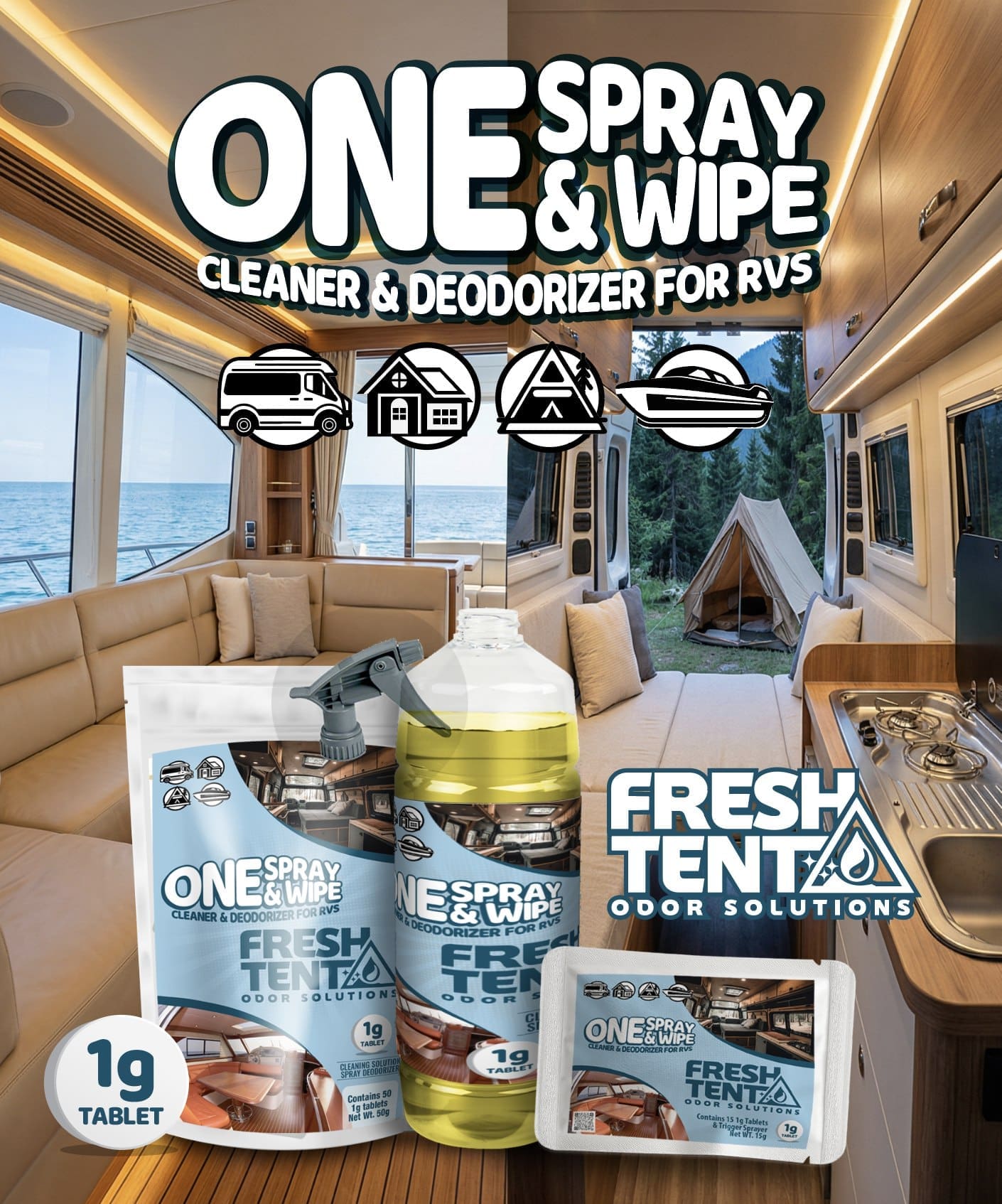
The Surface Spray provides targeted treatment where moisture and contamination frequently occur.
It can be incorporated into regular RV cleaning and maintenance routines.
🦠ONE Spray | A Cleaning, Deodorizing & Sanitizing Starter Kit

Real RV Owner Scenario
Imagine a family storing their RV near the coast during the summer.
The RV remains closed for several weeks.
Outdoor humidity stays above 80%.
Condensation develops around windows and inside cabinets.
By the next trip, the family notices a musty odor throughout the RV.
The problem isn't dirt.
The problem is moisture-driven microbial growth.
Without addressing the source, the odors are likely to continue returning.
Also Read🩱Why Does Camping Gear Smell Musty Every Year?

What To Do Next...
Humidity is one of the biggest contributors to recurring RV odor problems.
As moisture accumulates inside enclosed spaces, microorganisms such as mold, mildew, bacteria, and biofilms can begin producing the odors many RV owners struggle to eliminate.
Understanding the connection between humidity and odor formation is the first step.
Addressing the source is the next.
FreshTent's Large Space Kit, Stow Away 60, and Surface Spray provide RV owners with practical tools designed to help manage odors before they take over the next adventure.
Don't let humidity ride shotgun this summer. Keep your RV fresh, comfortable, and ready for the road.
📞Contact

Frequently Asked Questions
1. Why does my RV smell musty during the summer?
Summer humidity creates ideal conditions for mold, mildew, bacteria, and biofilms to grow. As these microorganisms multiply, they release odor-causing compounds that can create musty and stale smells inside your RV.
2. Can a clean RV still develop odors?
Yes. Even spotless RVs can develop odors if moisture accumulates in hidden areas such as storage compartments, under mattresses, inside air conditioning systems, and behind cabinetry.
3. Why do RV odors seem worse after storage?
When an RV sits closed for extended periods, moisture can become trapped inside. Limited airflow combined with elevated humidity often allows odor-producing microorganisms to grow unnoticed.
4. What causes the classic "RV smell"?
The familiar RV smell is often caused by microbial volatile organic compounds (mVOCs) produced by mold, mildew, bacteria, and biofilms growing in damp environments.
5. Why don't air fresheners solve RV odor problems?
Air fresheners typically mask odors with fragrance. They do not address the underlying microorganisms or odor-producing compounds responsible for the smell.
6. What areas of an RV are most prone to odor problems?
Common problem areas include storage bays, bathrooms, air conditioning systems, mattresses, upholstery, carpeting, under sinks, closets, and utility compartments.
7. How does chlorine dioxide help remove RV odors?
Chlorine dioxide helps address odors by oxidizing many odor-causing compounds and helping reduce microorganisms that contribute to recurring odor formation.
8. What FreshTent product is best for treating an entire RV?
The FreshTent Large Space Kit is designed for whole-RV treatment and is ideal for addressing odors throughout the interior during seasonal storage or after persistent odor issues develop.
9. What is the Stow Away 60 used for?
The Stow Away 60 is designed for enclosed areas such as closets, storage compartments, utility bays, and other locations where moisture and odors commonly accumulate.
10. How can I prevent humidity-related odors before they start?
Maintaining ventilation, controlling moisture, cleaning HVAC systems, removing damp materials, and using preventative odor-control products can help reduce the risk of odor development.