Ever unrolled a brand-new tent only to find it smells musty? You’re not imagining it—and it has nothing to do with use. Learn why moisture, synthetic materials, and trapped gases cause odors before your tent ever reaches the campsite, and how to prevent them from coming back.
1. Moisture Is Introduced Long Before You Buy the Tent
Even brand-new tents are exposed to moisture at several points:
- Manufacturing: Fabric coatings, seam sealers, and waterproof treatments are applied wet and cured in humid environments.
- Shipping: Cargo containers frequently experience condensation during ocean or cross-country transport.
- Retail storage: Tents are often stored compressed, sealed, and stacked in climate-uncontrolled warehouses.
All of this moisture becomes trapped inside folded fabric, creating the perfect micro-environment for odor formation.
👉 No visible mold is required for odor to exist.
2. Synthetic Tent Materials Trap Odor Molecules
Modern tents rely on synthetic materials such as:
- Polyester and nylon
- Polyurethane (PU) coatings
- Silicone waterproofing layers
These materials:
- Do not breathe well when folded
- Absorb and hold odor-causing gases
- Release smells slowly once unsealed
That “chemical-musty” odor many people notice is often a blend of manufacturing residues + microbial gases, not dirt or use.
3. Odors Come From Microbes — Not Dirt

Musty smells are almost always caused by microbial activity, not visible contamination.
Bacteria and fungi:
- Feed on trace organic residues left from manufacturing
- Thrive in dark, low-airflow, slightly damp conditions
- Produce sulfur- and nitrogen-based gases that smell earthy, sour, or moldy
This process can begin within days if moisture and confinement are present.
Even a tent that has never touched the ground can smell “old” because microbes don’t need dirt—only opportunity.
4. Compression and Airtight Storage Make It Worse
Brand-new tents are packed tightly for shelf efficiency. Unfortunately:
- Compression prevents air exchange
- Airtight bags lock odors in
- Any off-gassing or microbial odors become concentrated
When you finally open the tent, all of that trapped odor is released at once creating the impression that something is “wrong” with it.
5. Why Airing It Out Alone Rarely Fixes the Problem
Many campers try:
- Leaving the tent open outdoors
- Hanging it in the garage
- Letting it “air out” for a day or two
This helps temporarily but does not remove odor molecules already bound to fabric surfaces.
Odors often return as soon as the tent is folded and stored again, especially in humid conditions.
6. The Difference Between Masking Odors and Removing Them
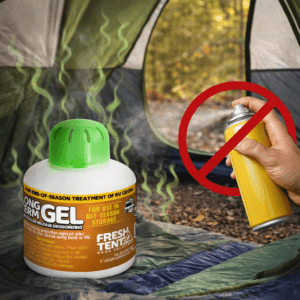
Sprays and scented deodorizers:
- Add fragrance on top of existing odors
- Leave residues that can attract more microbes
- Often worsen the problem long-term
True odor removal requires neutralizing odor-causing gases at the molecular level, not covering them up.
That’s why FreshTent products focus on odor destruction, not fragrance.
7. Preventing Musty Tent Odors from Day One
A simple, effective approach:
- Open and air out a new tent immediately after purchase
- Treat enclosed storage spaces (tent bags, RV compartments, closets) with controlled-release odor neutralization
- Avoid storing tents sealed while damp or compressed for long periods
This stops odor formation before it becomes a recurring issue.
Why This Matters for Campers and Outdoor Gear Owners
A musty tent doesn’t just smell unpleasant—it can:
- Transfer odors to sleeping bags and clothing
- Create an uncomfortable sleeping environment
- Shorten the usable life of fabrics and coatings
Addressing odor early protects both comfort and gear investment.