
You open your gear for the first trip of the season…
Tent? Smells off.
Sleeping bag? Worse.
Backpack? Yeah… not great.
And the frustrating part?
You know everything was clean when you packed it away.
So what happened?
Why This Problem Shows Up Every Spring
This isn’t random—it’s seasonal.
Spring brings:
- Higher humidity
- Warmer temperatures
- More moisture in the air
These conditions reactivate odor-causing buildup that developed slowly during storage.
👉 What seemed “fine” in the fall becomes noticeable the moment you open it.
Check out this article: https://clo2tablets.com/why-musty-odors-come-back-every-spring/
Why Camping Gear Smells Every Year
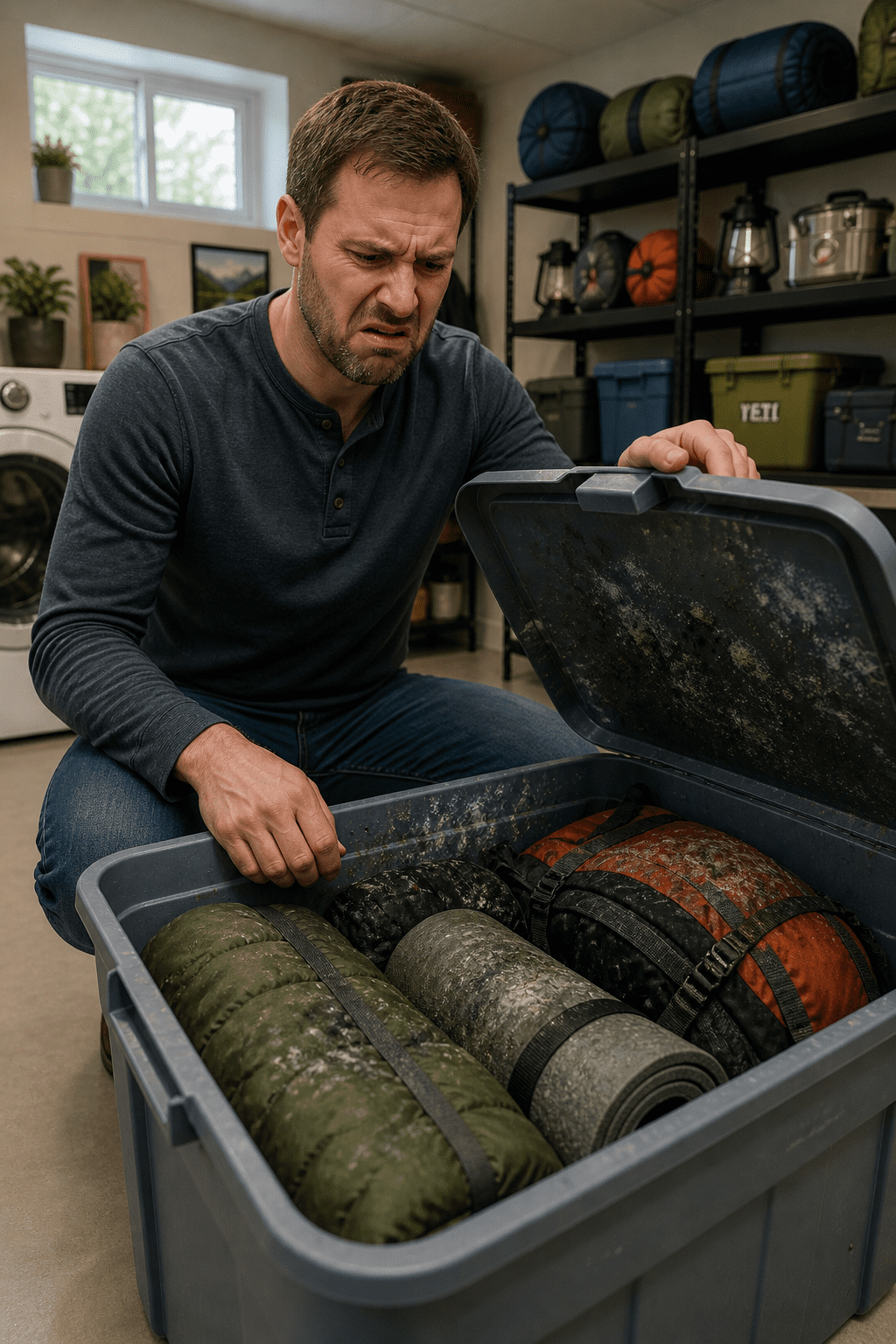
It comes down to a simple formula:
👉 Moisture + time + enclosed space = odor
Even slightly damp gear—combined with organic residue—creates the perfect environment for odor to develop over months.
And because most gear is made from porous materials, the odor doesn’t just sit on the surface…
👉 It embeds itself deep inside.
The Real Problem Isn’t Dirt—It’s What You Can’t See
Most people assume the smell means something is dirty.
But what’s actually happening is:
- Residual moisture remains in materials
- Microscopic buildup continues over time
- Odor compounds form and accumulate
👉 By spring, the odor is already built into the gear—not just on it.
STOW-AWAY 90 | Long-Term Granule Deodorizing Pouches
Where Odor Hides in Your Gear
Camping gear is designed for performance—not airflow.
Which means odor gets trapped in:
- Tent fabric and seams
- Sleeping bags and insulation
- Foam pads and cushions
- Backpacks and straps
- Storage bins and totes
These materials hold onto moisture and odor compounds, making them difficult to fully clean with basic methods.
Common Misconceptions About Camping Gear Odor
Let’s clear up a few things:
❌ “If it smells clean, it is clean”
→ Odor can be temporarily masked without removing the source
❌ “Dry gear can’t develop odor”
→ Even small moisture levels are enough
❌ “Washing solves the problem”
→ Surface cleaning doesn’t reach deep contamination
❌ “Sprays fix it”
→ They only cover the smell
👉 These misconceptions are why the problem repeats every year.
Why Washing and Sprays Don’t Work Long-Term
You can wash your gear.
You can spray it.
You can air it out.
And yet…
👉 The smell comes back.
Because:
- Washing doesn’t reach into materials
- Sprays only affect the surface
- Fragrance hides odor instead of removing it
Also read 📖The Definitive Guide to Camping Gear Odor Solutions: What Works, What Doesn’t, and Why
Why Surface Cleaning Isn’t Enough
This is the turning point.
Odor isn’t just sitting on your gear—it’s embedded within it.
To truly eliminate it, a solution must:
✔ Penetrate into fabric and foam
✔ Reach enclosed spaces
✔ Neutralize odor-causing compounds
👉 If it can’t do those things, it won’t last.
Deodorizing Camping, Tenting & Hiking Gear
What Actually Works to Remove Gear Odor
This is why many outdoor users rely on chlorine dioxide-based treatments.
These treatments:
- Penetrate into materials
- Reach enclosed environments
- Neutralize odor at the source
👉 Not by masking—but by eliminating what’s causing it.

Real-World Scenario
You pack away your tent after a fall trip.
It feels dry enough.
But inside:
- Small amounts of moisture remain
- The storage tote traps the environment
- Odor slowly develops over time
By spring, the smell hits immediately.
👉 Not because it just formed—but because it was building the entire time.
What’s Changing in Outdoor Gear Care
More people are starting to realize:
- Odor is not just surface-level
- Traditional cleaning methods fall short
- Deep neutralization is more effective than masking
There’s a shift happening toward:
👉 Solving odor at the source—not covering it
Also Read 📖Are FreshTent® Products Safe for Our Children and Pets?
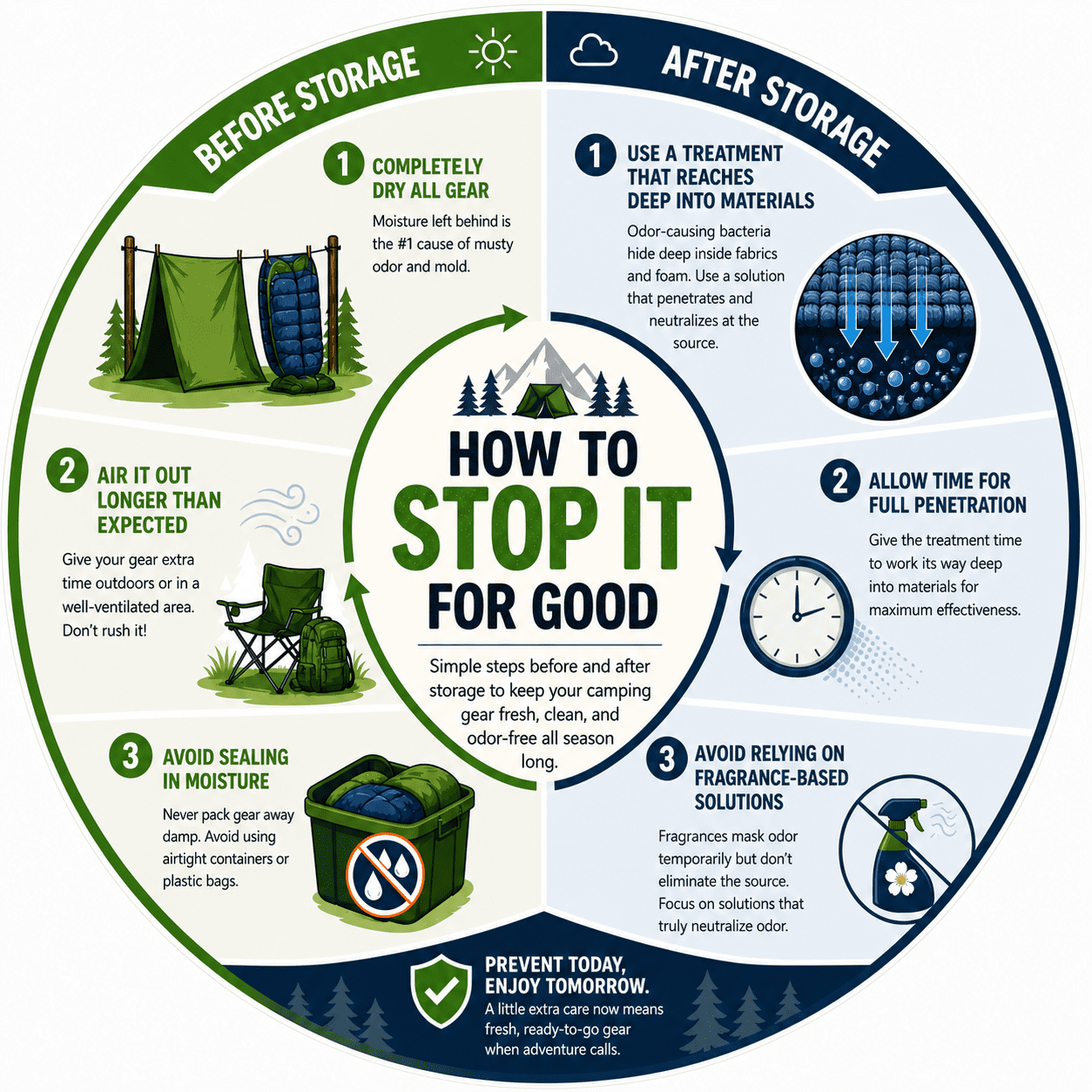
Want to Understand Why This Happens?
If you want to go deeper into the science behind why odors return every spring and how they develop at the source:
👉 Why musty odors come back every spring (CLO2 Tablets)
Why Musty Odors Come Back Every Spring?
Why This Matters More Than You Think
Musty gear impacts:
- Comfort during trips
- Confidence in your equipment
- Longevity of materials
- Overall outdoor experience
👉 And once odor sets in, it doesn’t go away on its own.
Conclusion (CTA)

If your gear smells every year, it’s not a mystery—it’s a cycle.
And once you understand what’s causing it, you can finally break it.
👉 Eliminate odor at the source, and your gear stays fresh—season after season.
❓ FAQs (10)
1. Why does camping gear smell after storage?
Because moisture and odor-causing buildup develop over time in enclosed spaces.
2. Can tents hold odor?
Yes, tent fabric and seams can trap odor deeply.
3. Why does my sleeping bag smell musty?
Residual moisture and buildup inside insulation can cause odor.
4. Does washing remove camping gear odor?
Not always, because odors can remain embedded in materials.
5. How do you remove musty smell from gear?
You need a method that neutralizes odor at the source, not just the surface.
6. Can storage bins cause odor?
Yes, enclosed bins trap moisture and odor compounds.
7. Why does odor come back every year?
Because the source was never fully eliminated.
8. Does airing out gear help?
It helps temporarily but doesn’t fully solve deep odor problems.
9. What materials hold odor the most?
Fabric, foam, and insulation materials.
10. How do you prevent gear odor?
Keep gear completely dry and eliminate odor before storage.