Why Campers Smell After Being Closed
In camping environments, you’re dealing with:
- High humidity swings
- Trapped condensation
- Organic residue (food vapors, fabrics, wood, upholstery)
- Limited ventilation
- Microbial growth in hidden areas
When airflow stops, these compounds build up in the air. The “closed-up” smell is typically a combination of:
- Volatile Organic Compounds (VOCs)
- Mold and mildew byproducts (microbial volatile organic compounds – mVOCs)
- Sulfur-based breakdown compounds
- Amine compounds from organic decay
These aren’t surface stains — they are airborne molecules.
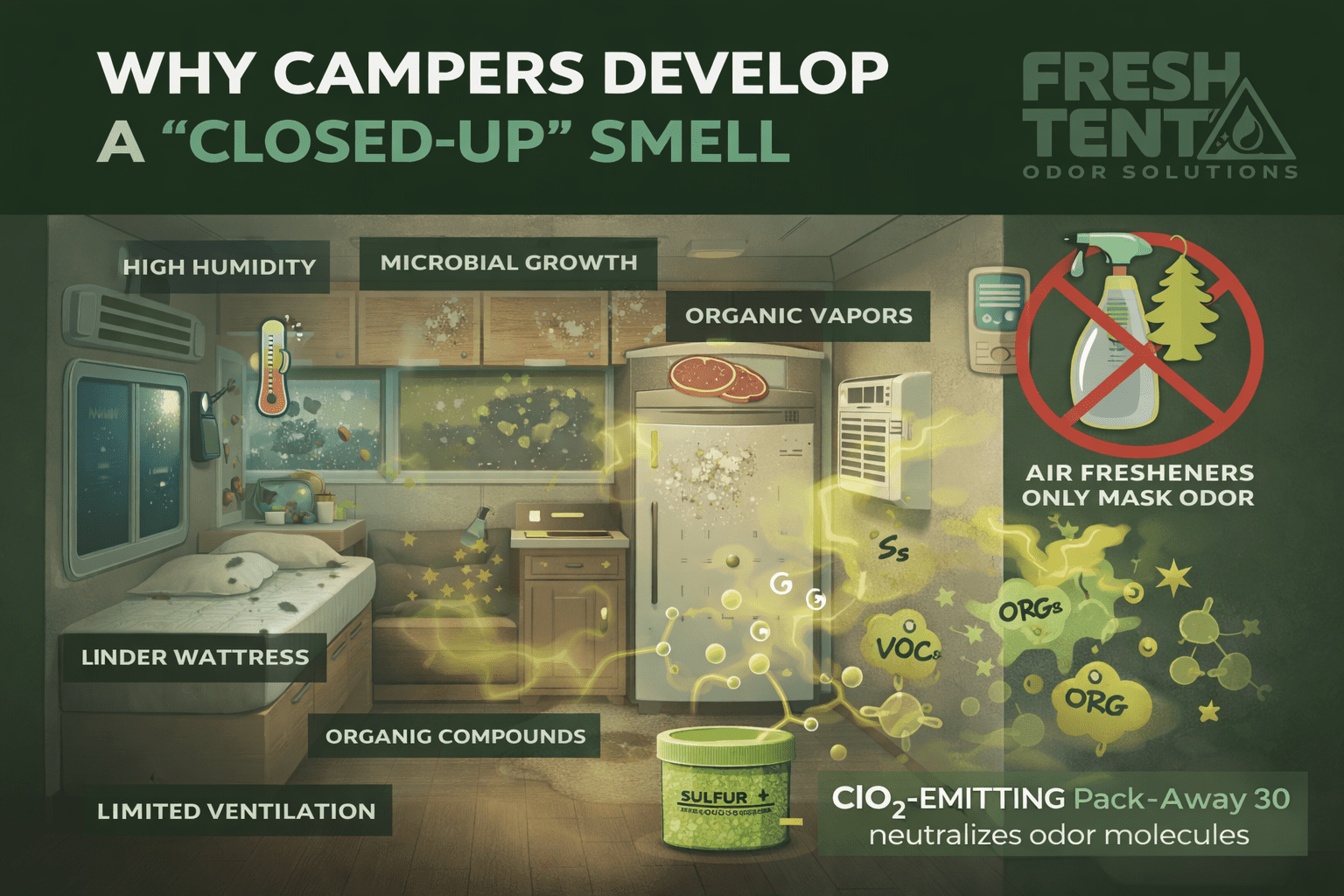
Why Air Fresheners Fail
Most odor products:
- Add fragrance to overpower smells
- Absorb some moisture
- Temporarily mask perception
They do not chemically alter the odor molecules.
As soon as fragrance dissipates, odor returns.

The Science of True Airborne Odor Removal
Chlorine dioxide (ClO₂) works differently. It:
- Disperses as a gas in low concentration
- Contacts airborne odor molecules
- Oxidizes sulfur, amine, and organic compounds
- Breaks molecular bonds responsible for odor
This converts odor molecules into neutral, non-smelling compounds.
Unlike bleach, ClO₂ works in the air without leaving harsh residue when properly dosed.
Best Solution for Short-Term Camper Storage
For RVs, pop-ups, and tents stored for a few weeks:
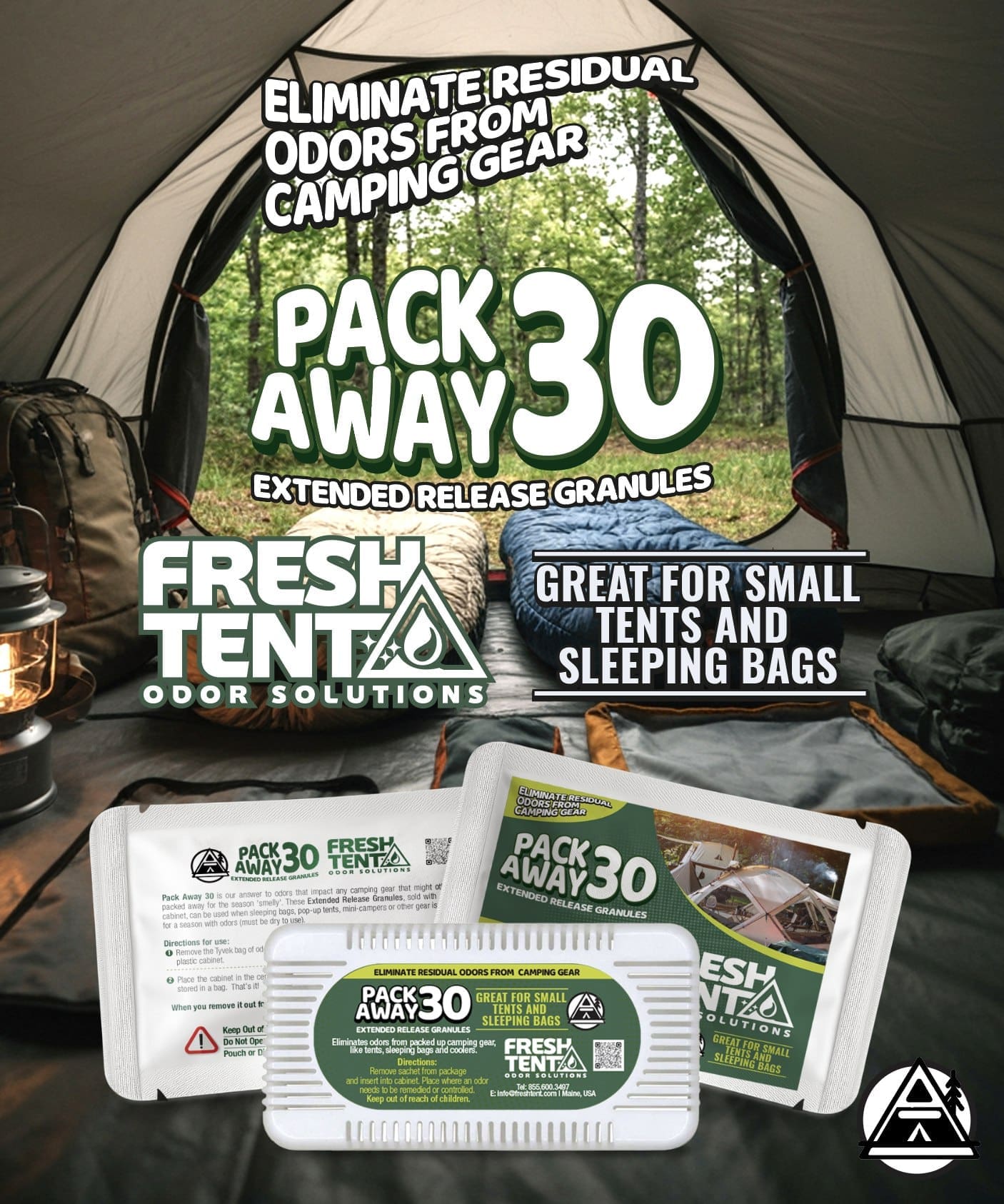
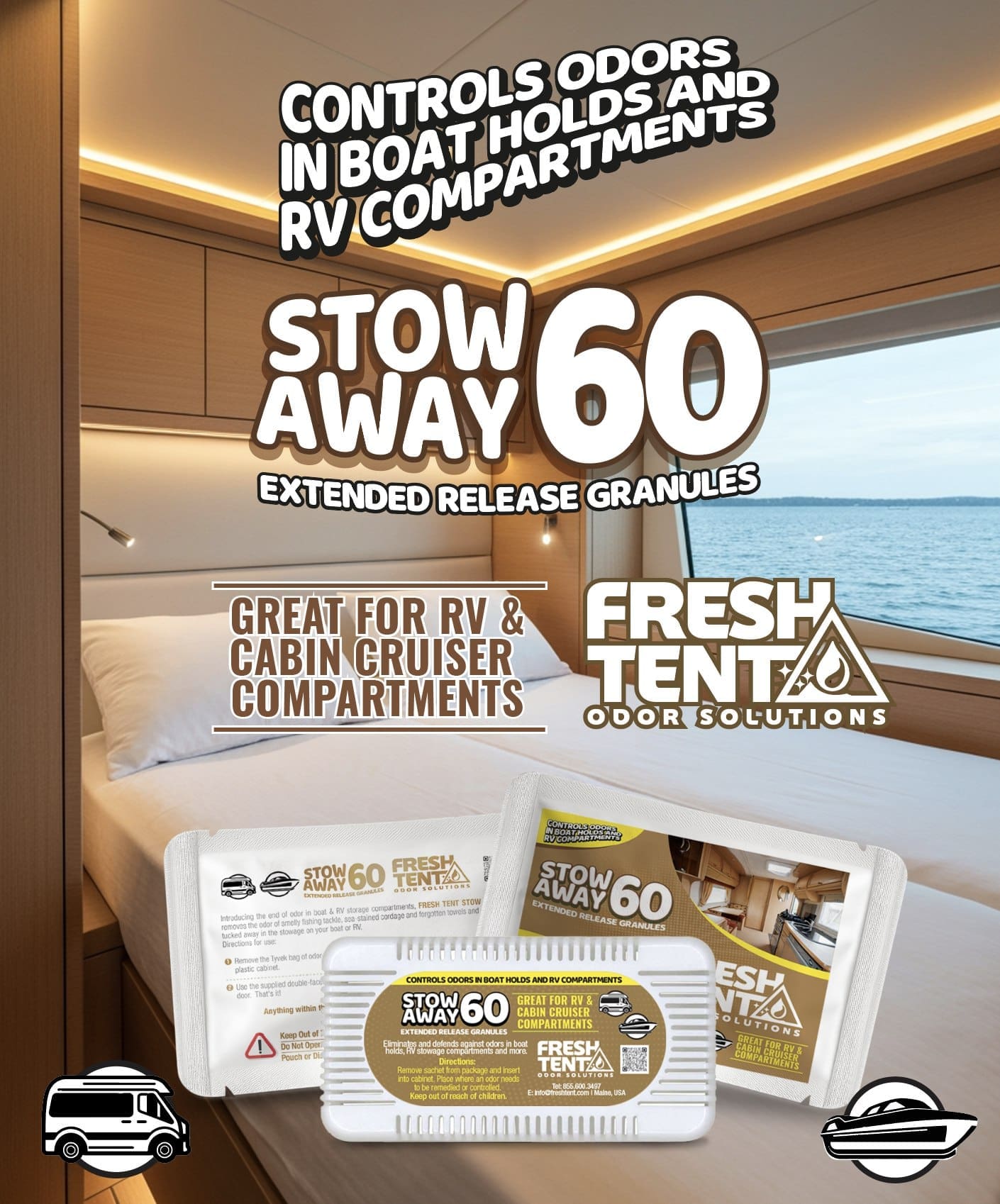
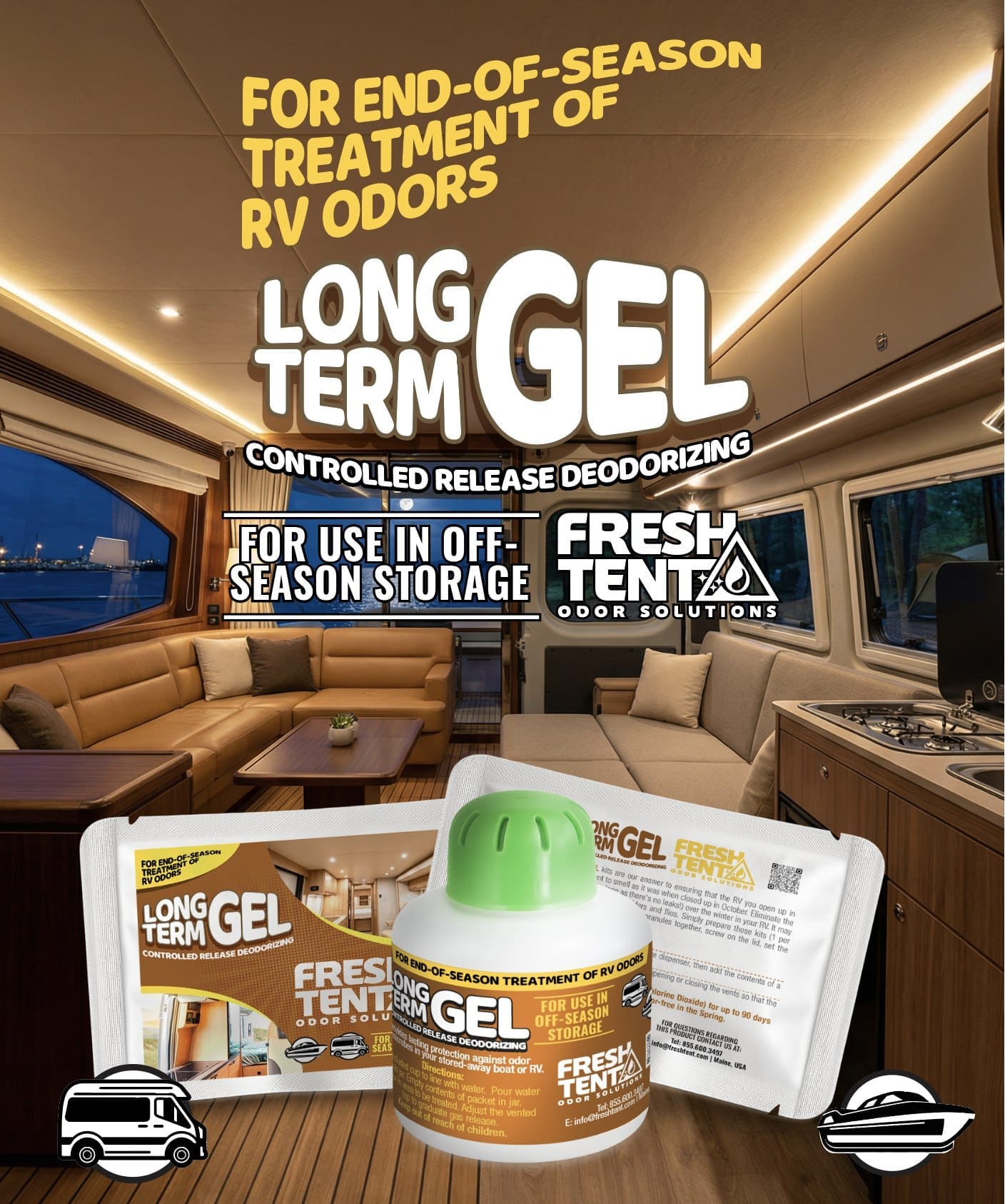
Recommended Products: Pack-Away 30, Stow-Away 60, Stow-Away 90 & Long-Term Gel
- Designed for ~30 to 90 days
- Ideal for small campers and gear storage
- Passive, dry-granule controlled release
- No electricity required
Place it inside the closed camper during storage to maintain neutral air quality.
Practical Use Plan
- Clean visible surfaces first
- Close windows and vents
- Place Pack-Away 30 centrally
- Let it work continuously during storage