Cooking in an RV releases airborne grease particles that cling to walls and ceilings, trapping odors long after meals are over. Learn why these smells persist — and how a simple FreshTent cleaning formula eliminates them at the source.
What’s Really Happening When You Cook in an RV
1. Cooking Creates Invisible, Sticky Aerosols
Even simple meals release:
- Cooking oils and fats
- Proteins and sugars (via Maillard reactions)
- Smoke and steam carrying odor molecules
These particles are heated, atomized, and lighter than air, allowing them to:
- Rise quickly
- Spread evenly
- Coat surfaces you never think to clean
Unlike splatters you can see, this residue is microscopic—and far more persistent.
2. RV Surfaces Are Odor Magnets
RV interiors are especially vulnerable because of:
- Low ceilings (shorter travel distance for grease)
- Vinyl wall coverings
- Textured ceiling panels
- Plastic fixtures
- Laminate cabinets
These materials don’t just get dirty — they hold onto oily films, which then:
- Trap odor molecules
- Feed odor-causing bacteria
- Re-release smells when humidity or heat rises
That’s why RVs often smell “off” even after airing out.
3. Why Odors Keep Coming Back
If cooking odors persist after cleaning, it’s usually because:
- Only visible surfaces were wiped
- Cleaners removed dirt, but not grease films
- Odors embedded above eye level were never addressed
Odors aren’t floating in the air anymore — they’re baked onto the surfaces.
The Correct Way to Remove Cooking Odors from RV Interiors
Step 1: Clean First — Odor Removal Comes Second
Odor neutralizers alone won’t work if grease remains. The residue must be broken down and removed, not masked. This is where FreshTent’s system approach matters.
The FreshTent Wall & Ceiling Cleaning Formula (Recommended)
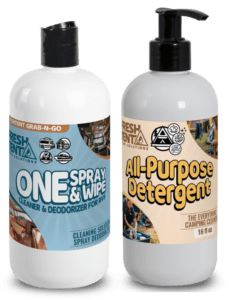
Mixing Instructions
Add:
- 1 oz FreshTent All-Purpose Cleaner
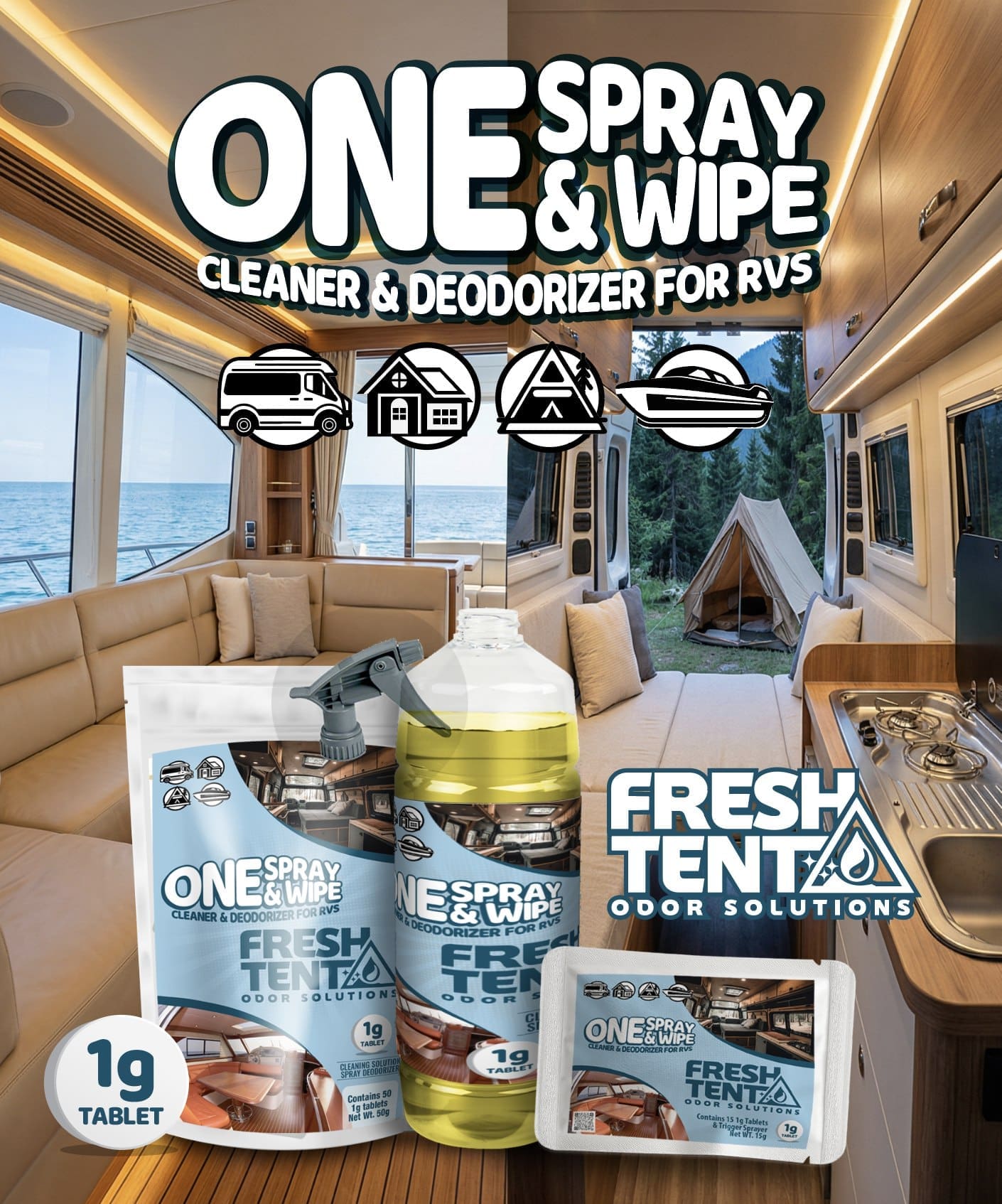
- To 16 oz of prepared ONE Spray & Wipe Cleaner
This creates a dual-action solution that:
- Cuts greasy cooking residues
- Breaks the molecular bonds holding odors
- Leaves surfaces truly odor-neutral
Step-by-Step Application
- Spray lightly onto a microfiber cloth (not directly overhead)
- Wipe:
- Walls
- Ceilings
- Light fixtures
- Cabinet faces
- Appliance exteriors
- Work from top to bottom
- Allow surfaces to air dry
No rinsing required.
Why This Combination Works (When Others Don’t)
ONE Spray & Wipe Cleaner
- Oxidizes odor-causing compounds
- Sanitizes surfaces
- Leaves no sticky fragrance residue
FreshTent All-Purpose Cleaner
- Emulsifies oils and fats
- Breaks down food films that trap odors
- Prevents re-bonding of smells to surfaces
Together, they remove both:
- The odor source
- The surface contamination holding it
Common Mistakes That Keep Cooking Odors Alive
- Using scented sprays (adds oily fragrance layers)
- Skipping ceilings and upper walls
- Using ammonia or vinegar (ineffective on grease films)
- Cleaning only “when it smells bad”
Odor control works best as routine maintenance, not emergency response.
FAQ Snippet Opportunities
Why don’t cooking odors go away after airing out an RV?
Because the odors are no longer in the air — they’re bonded to greasy surface films.
Are RV walls really dirty if they look clean?
Yes. Cooking aerosols are invisible but sticky and accumulate over time.
Can I just use ONE Spray & Wipe alone?
For light odors, yes. For cooking odors, adding All-Purpose Cleaner ensures grease removal.
Final Takeaway
Cooking odors stick to RV walls and ceilings because airborne grease particles bond to surfaces and trap odor molecules. The only permanent fix is surface cleaning that removes the grease itself.
Adding 1 oz of FreshTent All-Purpose Cleaner to a 16 oz bottle of ONE Spray & Wipe Cleaner creates a professional-grade solution designed specifically for RV interiors.
Clean the surfaces — and the odors have nowhere left to hide.