
The Short Answer: Why Do Odors Return?
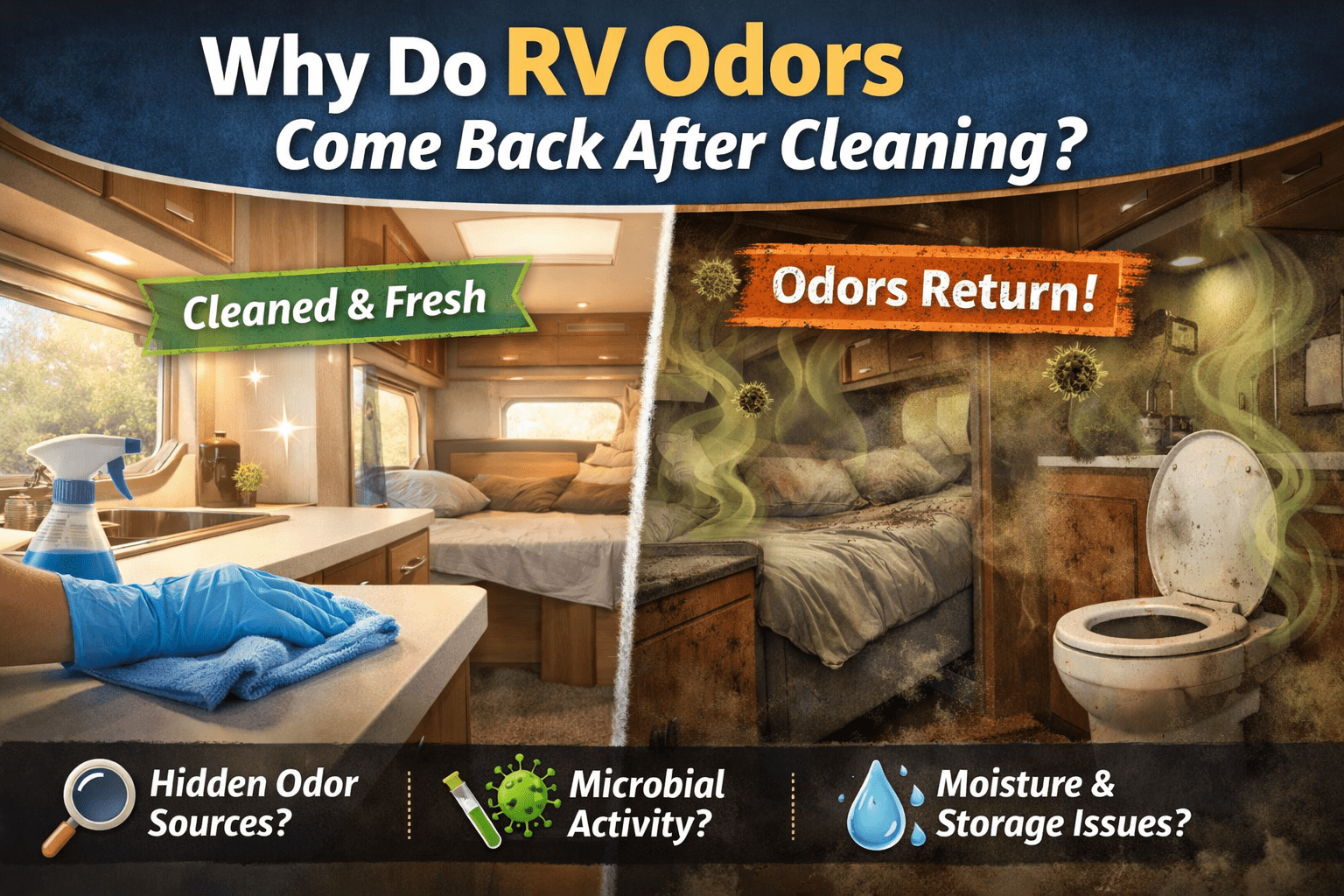
RV odors return after cleaning because most cleaning removes visible dirt, not the odor-causing molecules and microbes embedded in porous materials, air spaces, and systems. Unless odors are neutralized at their source—and prevented from reforming—they will reappear.
What “Cleaning” Usually Misses in an RV
1. Odor-Causing Molecules Are Invisible
Many RV odors come from volatile organic compounds (VOCs) released as bacteria break down organic matter. These gases:
- Are too small to be captured by wipes or soaps
- Linger in the air and absorb into soft materials
- Re-release when humidity or temperature changes
Cleaning surfaces doesn’t remove gases trapped in cushions, wall cavities, or HVAC systems.
2. RVs Are Full of Porous Materials

Unlike homes, RV interiors are packed with lightweight, absorbent materials:
- Upholstery and foam cushions
- Mattresses and bedding
- Plywood, particle board, and wall panels
- Curtains, carpets, and headliners
These materials absorb odors like a sponge and slowly release them back into the air—even weeks later.
3. Moisture Reactivates Old Odors
Humidity is a major trigger for odor recurrence. When moisture increases:
- Dormant bacteria become active again
- Odor molecules volatilize faster
- Mold and mildew resume gas production
This is why RV odors often return:
- After rain
- During storage transitions
- When the RV is reopened in spring
4. Tanks and Plumbing Create Ongoing Odor Sources
Even after dumping and rinsing:
- Biofilms remain inside gray and black tanks
- Drain lines retain organic residue
- P-traps dry out during storage
These systems continuously generate odor gases that migrate into the cabin air.
Why Air Fresheners and Deodorizers Fail
Most products marketed for RV odors:
- Mask odors with fragrance
- Absorb moisture, not odor molecules
- Work temporarily, not continuously
Once the fragrance fades, the original odor source is still active—and often stronger.
The Missing Step: Odor Neutralization at the Molecular Level

To stop odors from coming back, three things must happen:
1. Surfaces Must Be Cleaned AND Sanitized
Removing organic residue denies bacteria their food source.
2. Odor Molecules Must Be Neutralized
Odors are gases. They must be broken apart chemically—not covered up.
3. The RV Must Be Protected During Downtime
Storage is when odors rebuild. Continuous low-level odor control prevents:
- Mildew formation
- Rodent attraction
- Stale, “closed-up” smells
Why RV Storage Is When Odors Get Worse
When an RV is closed up:
- Air becomes stagnant
- Humidity fluctuates
- Microbes thrive unnoticed
Without ongoing odor control, storage essentially incubates odors, undoing all your cleaning efforts.
How to Keep RV Odors from Returning
A lasting strategy includes:
- Pre-cleaning surfaces before storage
- Treating the air, not just surfaces
- Long-term odor control while the RV is closed
This layered approach prevents odors from reforming instead of reacting to them after the fact.
More Frequently Asked Questions (FAQ):
1. Why does my RV smell clean at first, then bad again?
Because cleaning removed surface dirt but not the odor-producing gases or microbes embedded deeper in materials.
2. Why are RV odors worse than house odors?
RVs use more porous materials, have smaller air volumes, and experience higher humidity swings.
3. Can mold cause RV odors without visible growth?
Yes. Mold and bacteria can produce odor gases long before visible signs appear.
4. Why does my RV smell worse after sitting closed up?
Lack of airflow allows odors to accumulate and microbes to multiply.
Practical Takeaway
If RV odors keep coming back, the issue isn’t how hard you cleaned—it’s what you didn’t address. Odor molecules, microbes, moisture, and storage conditions all work together. The solution is not stronger fragrance, but smarter odor control.